Best freelance jobs & side hustles (2026)
Explore the best freelance jobs and side hustles for 2026, including beginner-friendly, high-paying, remote, creative, and AI-powered ideas.


Summary
Judge each path by demand, barrier to entry, remote delivery, AI risk and income ceiling. Beginners start fastest in writing, social media, basic design or virtual assistance. Development, AI consulting and UX design pay most.
On this page
- What makes a freelance job viable in 2026
- Freelance jobs vs. side hustles: Know what you are building
- Finding your starting point: Match your profile to a path
- Top freelance skill categories in 2026
- Best freelance jobs for beginners
- High-paying freelance jobs
- Side hustles 2026: The best options for people with full-time jobs
- Side hustles using AI tools
- Remote jobs vs. freelancing: One clarification
- Creative side hustles for designers
- Local side hustles
- Top freelancing ideas and freelance job ideas for 2026
- Once you have chosen a path: What comes next
- You have found your path. Now get paid.
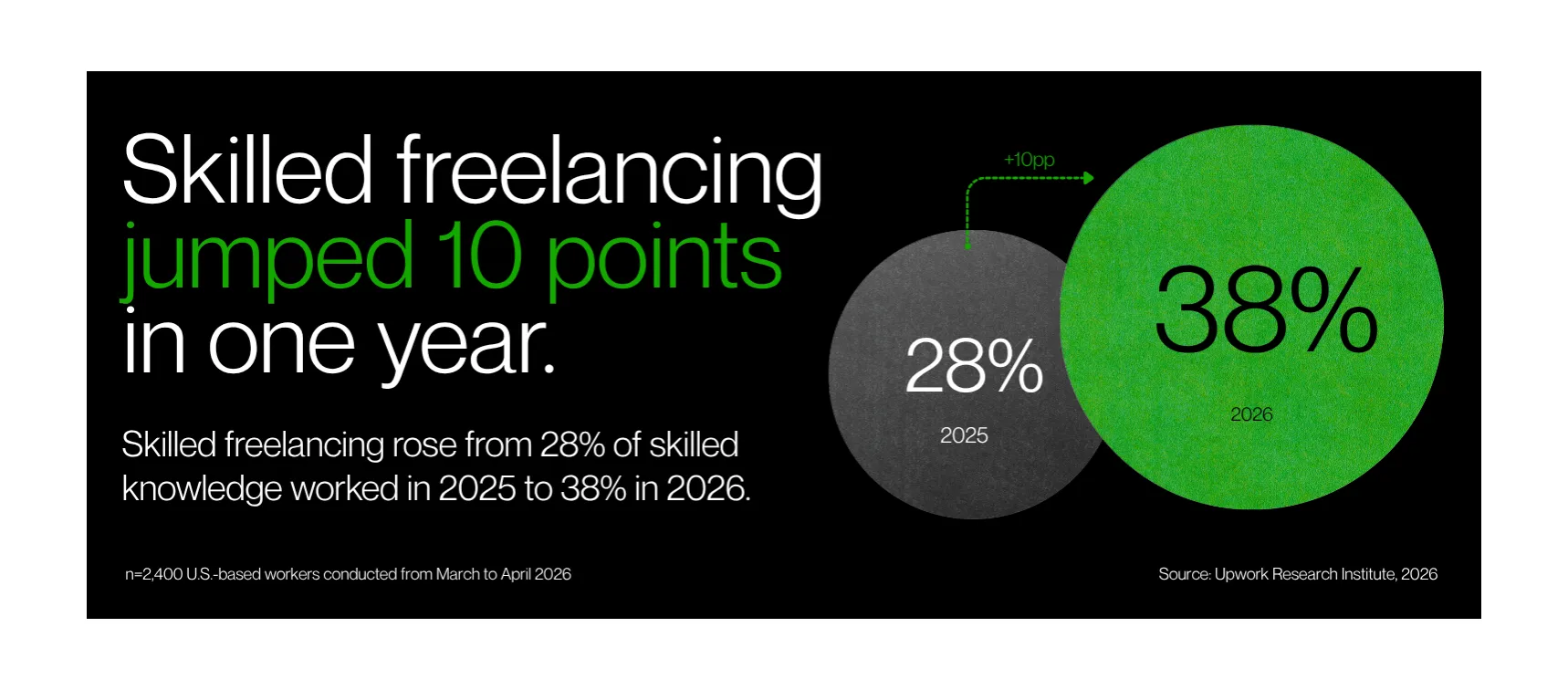
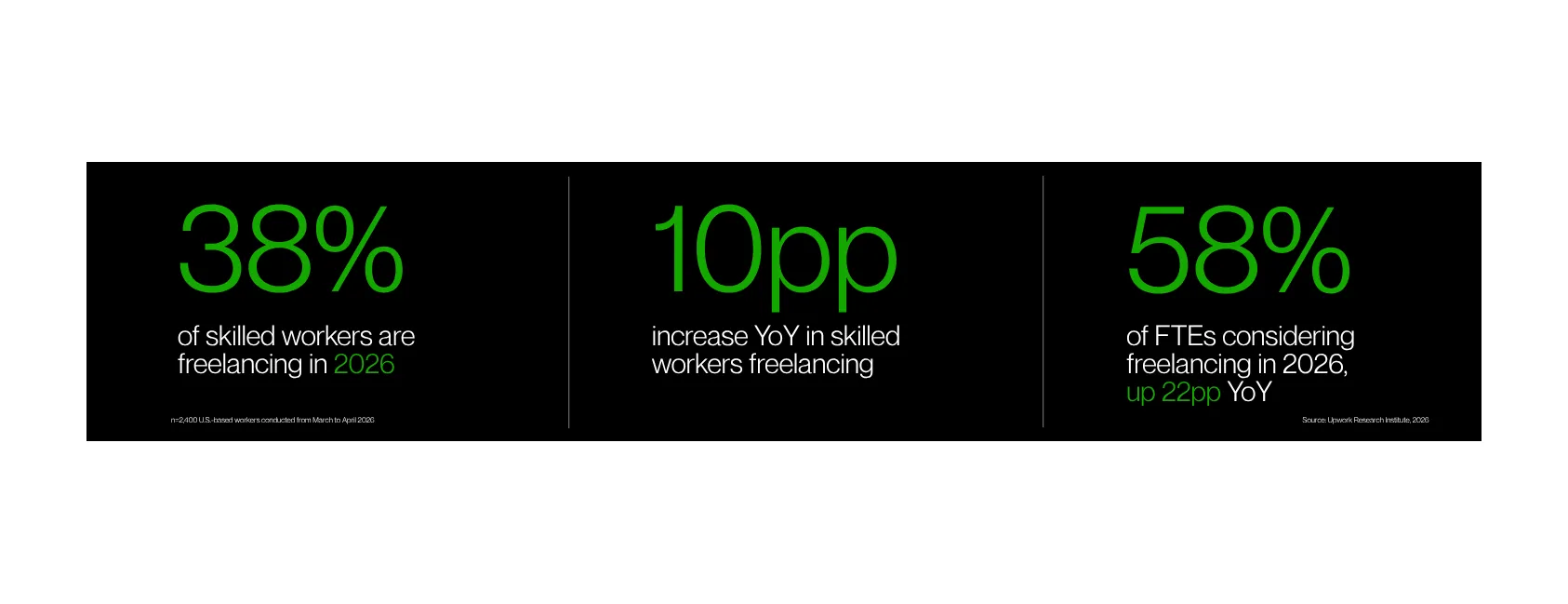
The freelance economy is no longer a niche. It is the mainstream. According to Upwork’s Future Workforce Index 2026, 38% of U.S. skilled knowledge workers now freelance, up from 28% a year earlier. In the 2025 edition, Upwork put their combined earnings for 2024 at $1.5 trillion.
That shift is not just about preference. It is about opportunity. Remote work is normalized. AI tools have lowered barriers in dozens of fields. International clients hire talent from anywhere. The infrastructure to go independent, to find clients, deliver work, and get paid, has never been more accessible.
The challenge is no longer “can I freelance?” It is “which path is actually worth building?” This guide maps the full landscape of the best freelance jobs in 2026, covers the top freelance careers across every major skill category, and surveys the best side hustles for people at every stage. It is organized around how you actually think about this decision: what you already know, how much time you have, and what your income goals are.
What makes a freelance job viable in 2026
Not all freelance paths are created equal. Before choosing one, run it through a five-part filter.
Current demand. Is this skill growing or contracting? A skill in declining demand requires more effort for less reward. Look for categories where client budgets are increasing, not shrinking.
Barrier to entry. How long does it take to go from learning to first income? A lower barrier means you can start earning while still developing mastery. A higher barrier means you invest more upfront, but it also keeps competition lower once you get there.
Remote deliverability. Can you serve clients in other countries? Freelancers who can deliver work remotely for international clients unlock a dramatically larger pool of potential buyers and tend to command higher rates than those limited to local markets.
AI disruption risk. Some categories are being meaningfully automated. Others are being enhanced. The honest answer in 2026 is that AI has compressed the lower end of many skill markets while increasing demand for the expertise needed to direct, evaluate, and deploy AI-assisted work. Understanding where your target category sits on that spectrum matters.
Income ceiling. What do experienced practitioners in this category actually earn? Entry-level rates in most fields are similar. The real difference between paths emerges at the senior level, when a specialist with a strong reputation and the right niche can earn multiples of what a generalist does.
Apply this filter to every category in this guide. It will help you move from “that sounds interesting” to “this is actually a fit.”
Freelance jobs vs. side hustles: Know what you are building
These are not the same thing, and conflating them leads to bad decisions.
A freelance job is a primary income path. You are building a client base, a reputation, and a sustainable business. The goal is to replace or exceed employment income. The time horizon is 6 to 18 months before reaching consistent earnings.
A side hustle is supplemental income. You have a full-time job, or another main income source, and you are adding revenue on the margins. The goal is extra cash, a creative outlet, or testing a skill before going full-time. The constraints are time and energy, not talent.
Both are legitimate. Both appear in this guide. But your approach to client acquisition, pricing, and commitment looks very different depending on which one you are doing. Be clear with yourself before you start.
Finding your starting point: Match your profile to a path

The fastest way to pick a direction is to start with what you already have.
If you are a complete beginner with no specific technical background, the most accessible entry points are content writing, social media management, basic graphic design, and virtual assistance. These fields have enough demand that you can start earning while still building skills.
If you have a technical or development background in software, data, or IT, the highest-opportunity categories are web and software development, data analysis, and AI implementation consulting. These fields have the widest gap between client willingness to pay and the number of skilled freelancers available.
If you come from a creative background in design, video, or visual arts, the paths with the strongest demand and income ceiling in 2026 are UI/UX design, motion graphics, and video production. Designers also have more passive income options than most freelancers, covered briefly in the creative side hustles section below.
If you have a business, management, or consulting background, strategic advisory roles, project management, and HR consulting translate directly to freelance work. These categories have lower platform competition and higher per-project value.
If you are currently employed and want supplemental income, the best-fit categories are those that are asynchronous, time-bounded, and deliverable in small units of work: writing assignments, design projects, code review, SEO audits. More detail in the side hustles for employed people section.
Top freelance skill categories in 2026
Development and technical
Web development, software engineering, data analysis, and AI/ML implementation are the highest-demand categories in the freelance market. Demand from clients is strong and growing. The U.S. Bureau of Labor Statistics projects employment of computer and information research scientists to grow 22% from 2025 to 2035, with AI, data and cybersecurity work among the reasons. Across all computer and information technology occupations, it projects about 280,000 openings a year over the same period.
Remote deliverability is near-perfect: code, data models, and technical documentation are fully digital deliverables. The barrier to entry is high relative to other categories, which keeps competition lower at the upper end. AI tools are reshaping parts of this category, particularly at the entry-level of coding, but the demand for engineers who can architect solutions, manage codebases, and implement AI tools is accelerating.
Full-stack developers and specialists in high-stakes sectors, such as fintech, health tech or enterprise infrastructure, tend to earn the most. Web development also brings steady repeat work: maintenance, performance fixes and new features turn a one-off build into a retainer.
Design and creative
Graphic design, UI/UX, video editing, motion graphics, and illustration remain highly active freelance categories. UI/UX in particular commands strong rates because it sits at the intersection of design and product thinking. Video editing and motion graphics have grown alongside the explosion of short-form content and brand video production.
AI image generation tools have impacted the commodity end of the market. Clients still want polished, brand-consistent design that requires human judgment, revision, and context. The disruption is real, but it has mostly flattened rates at the low end rather than eliminating demand.
Writing and content
Copywriting, content writing, technical writing, and SEO writing form one of the broadest and most accessible freelance categories. Entry barriers are lower here than in technical fields, and clients span every industry. Technical writing commands the highest rates within this group: it requires deep subject matter knowledge combined with the ability to translate complexity into clarity.
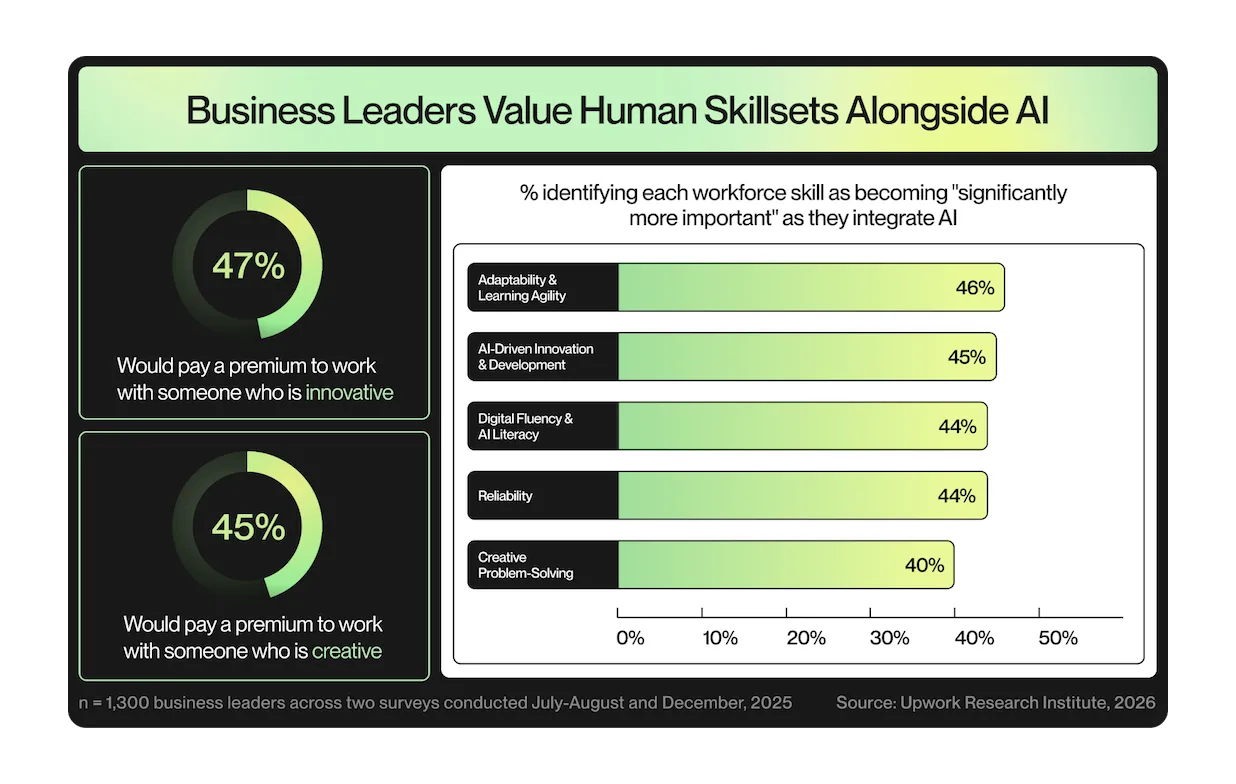
AI-assisted writing has compressed pricing at the commodity end, particularly for generic blog content. The demand has shifted toward writers who bring strategic judgment, subject expertise, or a distinctive voice: things generative tools do not replicate well. Clients paying premium rates are paying for expertise, not just words.
Marketing and growth
Digital marketing, SEO, paid media management, and email marketing are established freelance categories with consistent client demand. Businesses of every size need help with search visibility, advertising performance, and customer acquisition, and few have the budget to hire specialists full-time.
SEO in particular has seen demand increase as AI-generated content floods the web and clients struggle to stand out. Experienced SEO specialists who understand technical SEO, content strategy, and link building are in a strong position. For specifics on the top freelance skills in marketing and what clients are paying for, the Top Freelance Skills cluster covers this category in depth.
Social media
Social media management, content strategy, and community management represent one of the most accessible entry points into freelancing. Almost every business needs consistent social presence and lacks the in-house capacity to maintain it.
The ceiling is real: social media management can generate a solid supplemental or primary income, but the highest-earning professionals in this space have moved into broader content strategy or brand advisory roles. If social media is your entry point, treat it as a launchpad, not a destination.
Consulting and advisory
Business consulting, financial consulting, HR consulting, and AI consulting translate directly from corporate careers to freelance work. If you have spent years inside a specific function, you have something most freelancers lack: domain depth and stakeholder credibility.
These engagements tend to be higher-value, longer-duration, and less price-sensitive than project-based creative or technical work. Many consultants move to retainer arrangements after the first engagement, which creates predictable recurring income. If you work that way, Ruul’s subscription invoicing handles recurring invoices automatically, so the admin does not eat into the time you spend on the work. The trade-off is that consulting requires an established reputation or network to get started. For beginners without a track record, this is not the easiest first path; for career-changers with 10+ years of functional experience, it is often the fastest to high income.
Emerging: AI consulting and prompt engineering
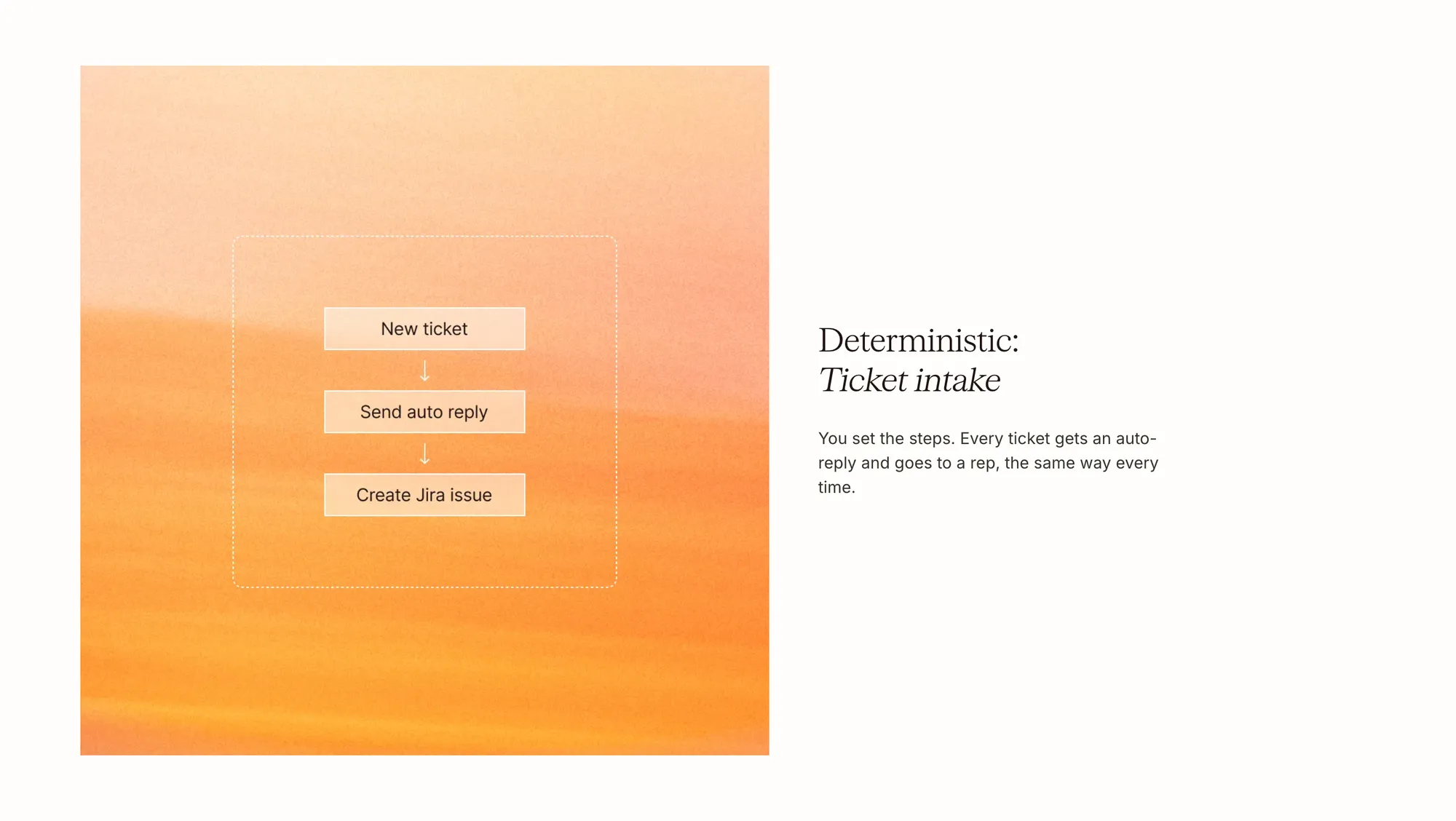
AI consulting, prompt engineering, and AI implementation for small and medium businesses represent the newest significant income category in the freelance market. Businesses across every industry are trying to figure out how to use AI tools, automate workflows, and train their teams. Most do not have in-house expertise to do it.
The demand is genuine and still underserved. The barrier to entry is lower than it looks: you do not need to be a machine learning engineer to help a small business automate their customer service or build a content workflow. Practical implementation knowledge, combined with business communication skills, is the current gap the market is paying to fill.
Best freelance jobs for beginners
If you are starting with no client history and limited portfolio work, certain categories are significantly more forgiving than others.
No client history is not the same as no skills. The easiest entry points are skills you can bring to a paid standard with a little focused practice, or skills you already use in a day job, at school or in a hobby. What a client needs from a beginner is proof that you can do the specific task reliably. One or two strong samples beat any claim about passion.
Content writing and copywriting have the lowest technical barrier and the widest number of clients. Social media management requires no formal credentials and allows you to demonstrate results quickly. Basic graphic design, supported by accessible tools, is achievable for anyone with visual instincts and willingness to develop their eye. Virtual assistance is one of the most direct ways to start earning quickly, with tasks requiring organization and responsiveness more than any specific technical skill.
Each beginner-friendly job has a quick way to make that proof, a likely place to find the first client, and a direction to grow in:
| Job | Proof to make first | Where first clients often come from | Where it grows |
|---|---|---|---|
| Content writing | Three samples in a niche you know, published on Medium or LinkedIn so they have a link | Small businesses in that niche, ProBlogger’s job board | SEO, then conversion copywriting |
| Social media management | A sample content calendar and five to seven posts for a real or invented brand | Local restaurants, shops and service businesses | Paid social and analytics reporting |
| Virtual assistance | A list of five to ten tasks you do well | Upwork, Facebook groups for online business owners | Executive, operations or tool-specific VA work |
| Graphic design with AI tools | Ten to fifteen social graphics or a set of slide templates in Canva or Adobe Firefly | Fiverr, where clients shop by samples; Behance for visibility | Pitch decks and brand identity packages |
| Short-form video editing | Two or three edits of your own footage or free stock from Pexels or Pixabay | Podcasters, fitness and food creators, local businesses | Motion graphics, long-form editing, retainers |
| No-code websites | Two or three sample sites on Webflow, WordPress or Squarespace | Local businesses with no site or an outdated one | E-commerce, SEO, light coding |
| Translation | Two or three sample translations of different content types | Upwork, ProZ.com | Legal, medical or technical translation |
| Customer service and community management | Working knowledge of a support tool like Zendesk or Freshdesk | Upwork, ModSquad, course creators and membership sites | Customer success, community strategy |
| Data entry and research | Accurate, tidy spreadsheet work | Fiverr, Upwork, Clickworker | Research and operations support |
Speed and ceiling differ. Virtual assistance and data entry usually pay soonest, and translation moves fast if you already have the language pair. Writing and video editing need a few samples before money follows. Data entry is a bridge, not a destination: rates stay low unless you move into research, operations or writing. Niche writing, video editing, no-code sites and specialized translation keep growing with experience.
One warning for writers: AI has cut demand for generic content. A beginner who pitches a niche they know, like a nurse writing health content or a former retail manager writing about e-commerce, stands out far more than a generalist.
AI tools also shorten the learning curve in most of these jobs. Video editors get auto-captions and audio cleanup, design beginners get Canva’s AI features, and writers catch errors before a client does. The tools speed up delivery. They do not replace judgment.
The key in all of these is moving fast. Start with small projects. Build a portfolio before you need one. Rate-setting and niche focus come later, once you understand what clients actually value.
High-paying freelance jobs
Some categories consistently command premium rates from clients. Development and software engineering, AI consulting, UX design, and specialized advisory work sit at the high end of the market. These paths require more upfront investment in skills and reputation, but the gap between entry-level and experienced rates is substantial.
Two things drive those rates: scarcity and business impact. A skill that is hard to replace and tied to revenue, risk or cost gets priced on outcomes, not hours. A freelancer who closes a security gap or builds a model that cuts operating costs is not competing on price. A few more roles sit firmly in that zone:
- AI and machine learning engineering. Upwork’s rate guide puts machine learning engineers at $50 to $200 an hour. Clients look at Python skills, frameworks like TensorFlow or PyTorch, and finished projects more than formal credentials.
- Cybersecurity. The Bureau of Labor Statistics projects employment of information security analysts to grow 21% from 2025 to 2035. Auditors, penetration testers and security architects build credibility with certifications like CISSP, CEH or CompTIA Security+, and close deals with documented results.
- Data science. Employment of data scientists is projected to grow 35% over the same decade. The top of this market pays for people who turn findings into decisions, not just models.
- Prompt engineering. There are no formal credentials yet, so results are the entry ticket: prompts that cut production time, improve output or automate manual work. Domain knowledge in healthcare, law or finance lets you charge for two scarce skills at once.
- Freelance attorney. Startups and growing companies hire attorneys for targeted work instead of keeping a legal team. A license is required, and the top rates go to specialists in corporate law, intellectual property, data privacy or regulatory compliance.
The freelancers at the top of any category share a pattern: specificity over breadth, outcomes over effort. They narrow their positioning, build case studies with measurable results, such as a conversion lift for a UX designer, and price on value rather than hours. One high-value vertical, like SaaS, finance or health for a copywriter, lifts rates faster than years of generalist work. And they turn their best clients into ongoing retainers: three or four steady clients mean predictable income and far less time spent pitching.
The highest-paying clients are often international. A developer, consultant, or UX designer working with clients in North America, Western Europe, or the Middle East can access rates that simply do not exist in most local markets. Ruul lets you invoice international clients as simply as local ones, in 190 countries and 140+ currencies, with no company registration required.
Side hustles 2026: The best options for people with full-time jobs
Freelancing while employed works when the work is asynchronous, deliverable in defined units, and not dependent on live client calls during business hours.
Writing, SEO, design work, code review, financial consulting, and content creation all meet this standard. You can write an article at 9pm. You can audit a website on a Saturday. You can turn around a logo project across a week of evenings. You cannot reliably manage a client’s social media in real time or run a live consulting engagement while also holding a full-time job.
The practical advice: start with one client, one deliverable type, and one timeline you know you can keep. Reliability matters more than volume when you are starting. A single happy client who rehires you is more valuable than five projects you cannot deliver consistently.
Side hustles using AI tools
AI tools have done two things for freelancers simultaneously: they have lowered the floor in some markets, and they have created entirely new income opportunities.
The new opportunities are real. Freelancers are earning income by helping businesses set up AI workflows, training teams on AI tools, creating AI-assisted content at volume, and building automation systems for clients who have no idea how to do it themselves. These are not speculative future paths. They are active categories with paying clients today.
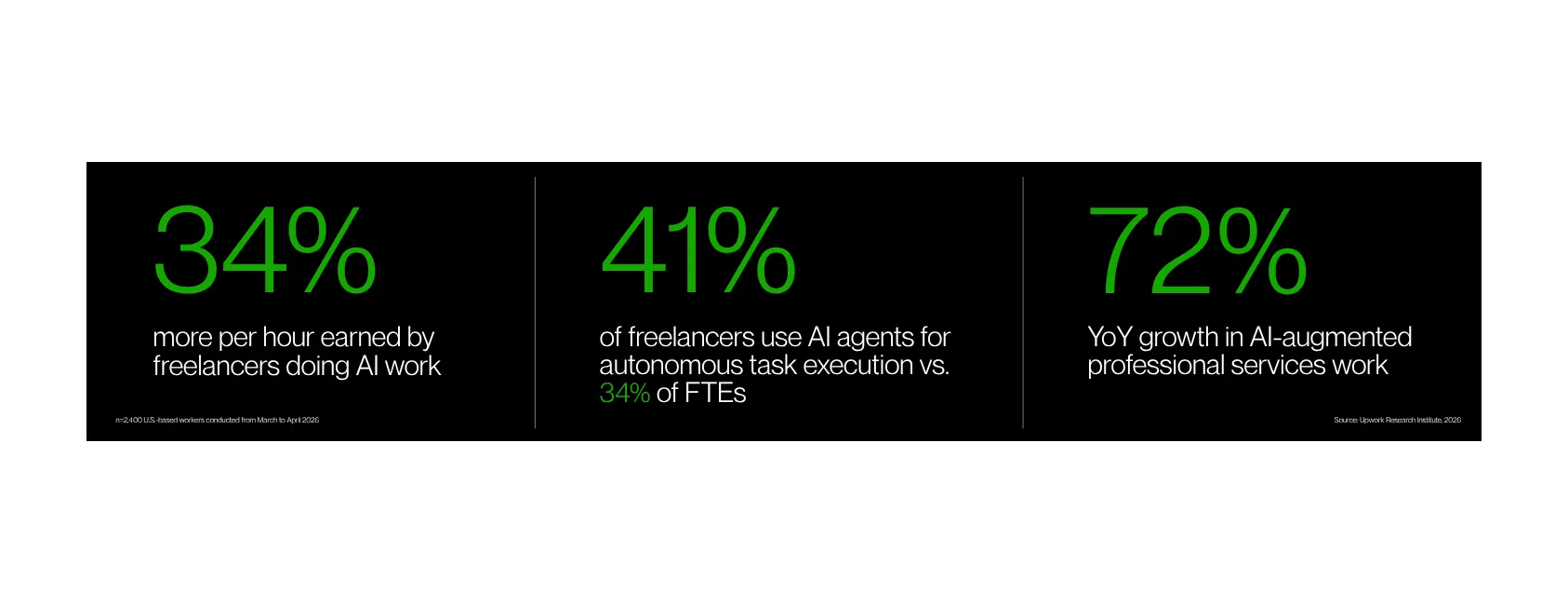
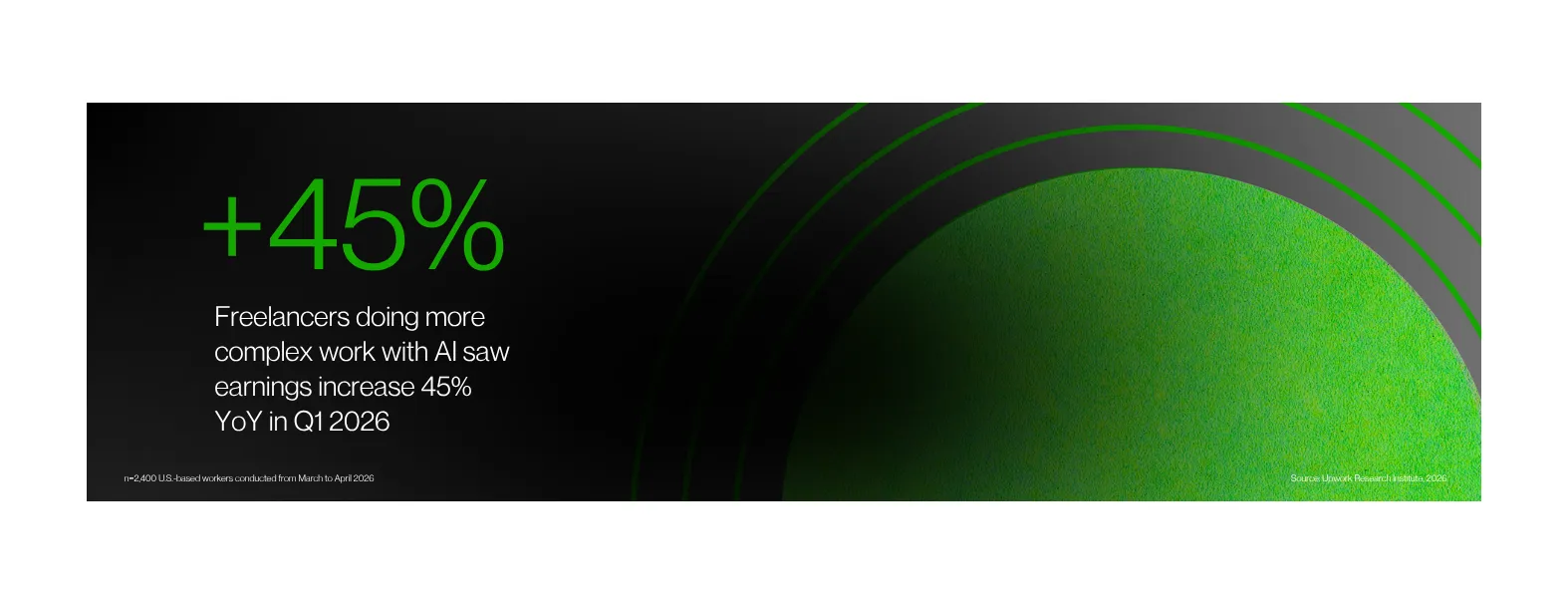
The floor compression is also real. Upwork’s 2026 data shows it: simpler generative AI and creative production work grew 90% in new contracts in a year, while earnings per contract fell 13%. Freelancers doing more complex work with AI saw their earnings rise 45%. Clients who once paid for commodity content, basic graphics, or simple data processing now have AI options. The freelancers who have adapted treat AI as a production tool rather than a competitor: using it to deliver faster, at higher quality, while charging for the judgment that the tool cannot provide.
Remote jobs vs. freelancing: One clarification
These are not the same thing, and confusing them leads to wrong expectations.
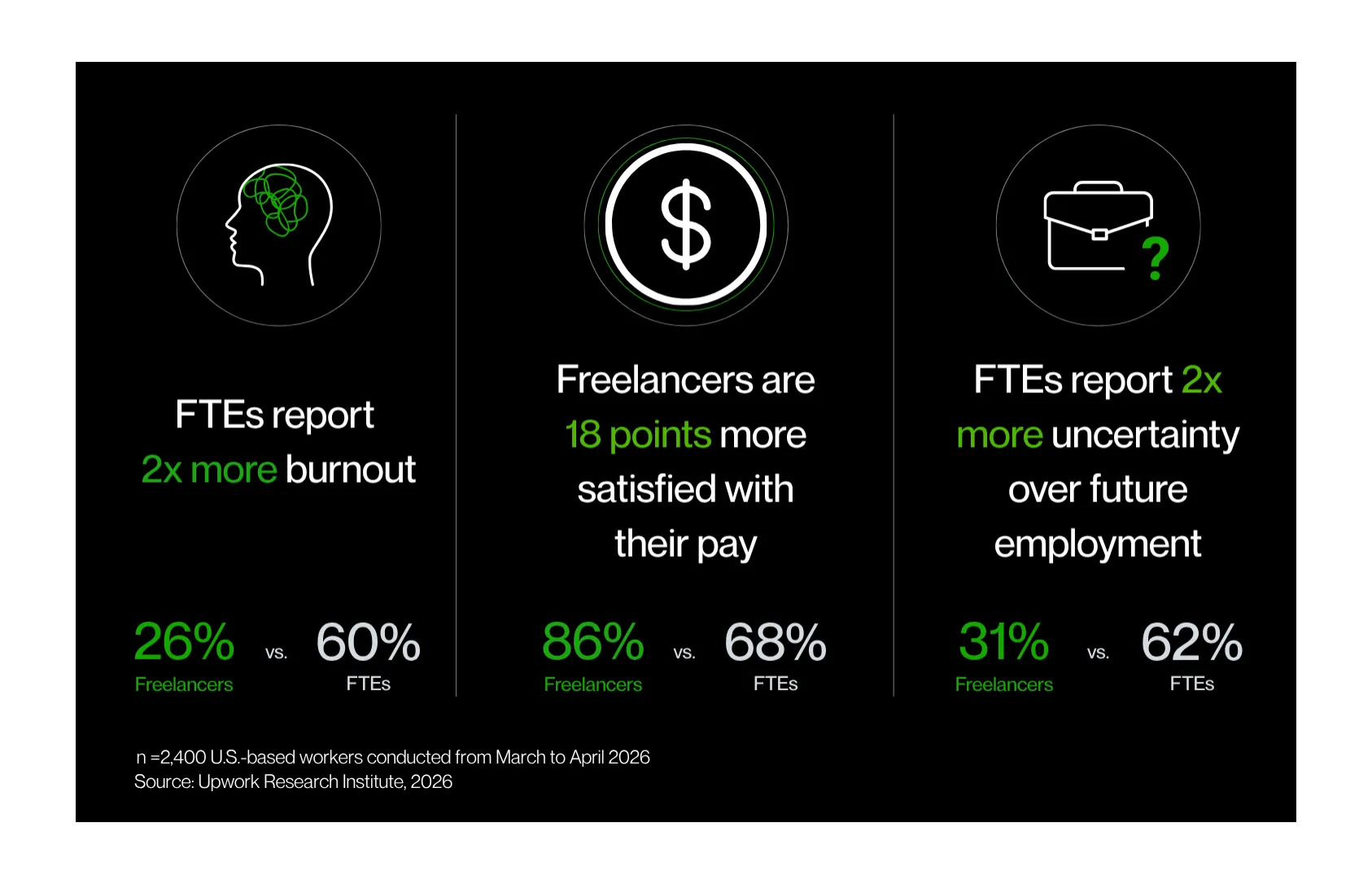
A remote job is employment. You work for one company, under their direction, with a salary, scheduled hours, and (usually) benefits. Location is flexible; the employment relationship is not.
Freelancing is self-employment. You work for multiple clients, set your own rates, choose your projects, and carry your own administrative responsibilities: taxes, invoicing, contracts, insurance. Location flexibility comes standard, but so does income variability and the cost of building your own pipeline.
Both are valid. The shift toward remote work has normalized distributed work globally, which directly benefits freelancers seeking international clients. More clients have the systems in place to work with someone they have never met in person. That matters for your ability to access better markets. But remote employment and freelancing are different structures, with different risks and different upsides.
Creative side hustles for designers
Designers have more income stream options than most freelancers. Beyond client work, there is meaningful income in selling templates, digital products, stock assets, and online courses or tutorials.
The appeal is leverage: you build something once and it earns repeatedly. The challenge is that passive income from digital products requires an audience or a distribution platform to work. It is not truly passive at the start. But for designers with existing skills who are also building a client practice, these parallel income streams can add meaningful revenue without proportional time.
If you need income soon, start with fixed-price packages, like a logo set or a pitch deck at a set price, or paid portfolio reviews. Print-on-demand, stock illustration and courses take months or years to build up before they pay meaningfully.
Local side hustles

Some freelance services are better in person. Photography, event support, brand photography, in-person training, and tutoring all benefit from local presence. These are not inferior to remote work. In many cases, local relationships and word-of-mouth drive faster early growth than any platform can.
If your target clients are businesses or consumers in your city, a local positioning can be a genuine advantage, not a limitation. Check demand where you live before you commit: search Nextdoor and local Facebook groups for the service, and see how much of it is already on offer.
Top freelancing ideas and freelance job ideas for 2026
The most interesting opportunity in 2026 is not in the established categories. It is in the emerging niches where demand is real and supply is thin.
AI consulting and workflow automation are the clearest examples. Prompt engineering as a productized service, particularly for businesses that want repeatable outputs, is a real income path. Niche technical writing for AI and software products is in high demand. Video-first content strategy, as short-form video continues to dominate marketing budgets, is an area where skilled freelancers are commanding strong rates.
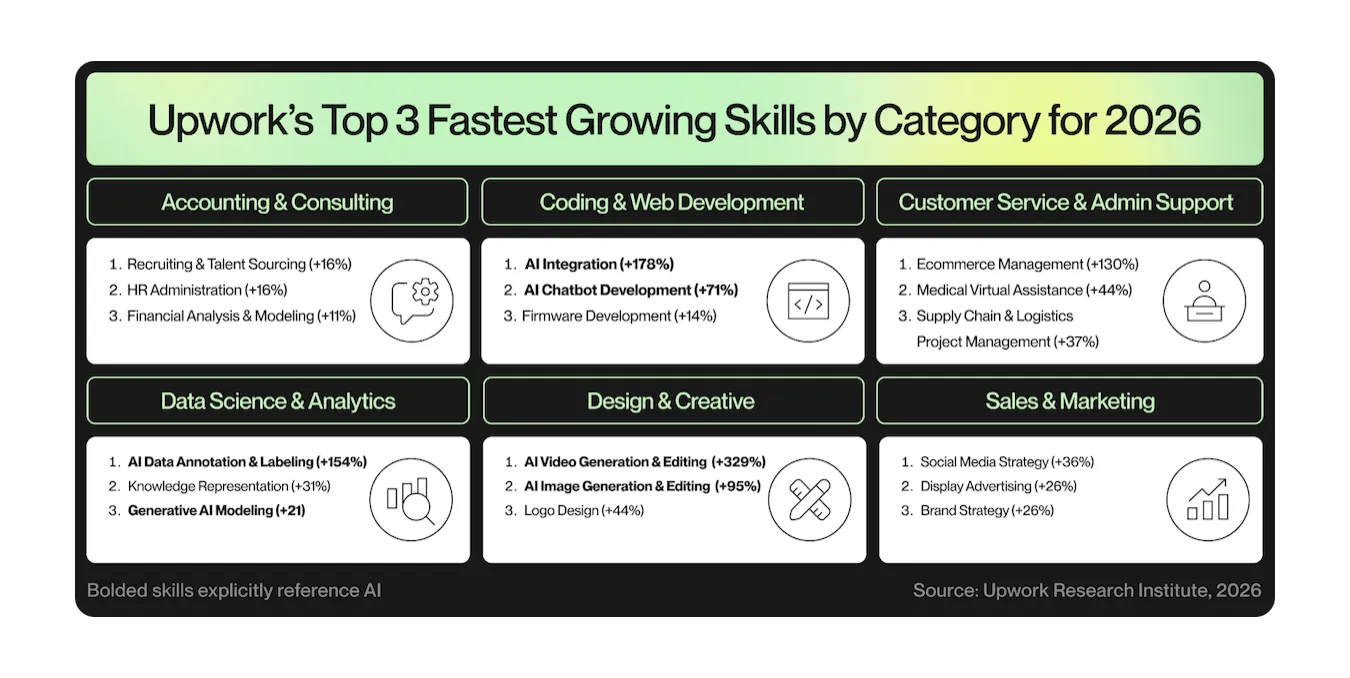
Several other niches have growing demand in 2026:
- Data privacy and compliance consulting. Practical help with GDPR, CCPA and the AI transparency rules of the EU AI Act, for small businesses that handle EU customer data and cannot keep a law firm on retainer. It is advisory and implementation work, not legal representation.
- Accessibility audits. Testing websites, apps and documents against WCAG 2.1 and 2.2, then fixing or advising on what fails. The European Accessibility Act has been enforced since June 28, 2025 and covers online shops, banking and apps, including those of non-EU businesses selling in the EU.
- SEO for AI search. Helping businesses that have lost clicks to Google’s AI Overviews earn citations inside them, through E-E-A-T signals and clearer content structure.
- LinkedIn ghostwriting. Interviewing founders and executives, capturing their voice and turning it into a steady posting cadence. The work is naturally retainer-based.
- Fractional executive roles. Part-time CMO, CFO or COO work for companies that need senior judgment but not a full-time hire, usually on monthly retainers. It is a path for people with genuine senior experience, not a starting point.
- E-learning content development. Instructional design, scripting and production for companies moving training online, and for experts turning what they know into courses.
- Video repurposing. Turning podcast episodes, webinars and conference talks into short clips, transcripts and social posts, for organizations sitting on archives they have never reused.
- Community building. Setting up and running communities on Discord, Slack or Circle for SaaS companies, creators and brands that want audience relationships no algorithm controls.
- International hiring compliance advice. Helping growing companies hire freelancers in other countries with sound documentation, contract structure and worker classification checks, before they need a lawyer.
Whichever you pick, specialize by industry or use case. “AI workflow automation for real estate brokerages” commands better rates and closes faster than “I build workflows,” because clients trust domain knowledge. Video repurposing and accessibility audits fit around a full-time job; fractional roles and community management usually need dedicated time.
Once you have chosen a path: What comes next
Choosing a category is the beginning, not the end. You still need to build a portfolio, set your rates, find your first client, and put in place the administrative basics: a contract, an invoicing process, a system for tracking what you are owed.
Part of getting started is also keeping your finances organized from day one: tracking what you have invoiced, what has been paid, and what you will owe at tax time. Ruul’s tax-ready document hub centralizes your transaction history and makes it exportable, so you are not scrambling at year-end. What you need to do before any of that becomes relevant is exactly what this pillar covers. Know what you want to do. Know why it is viable. Know which version of it fits your skills, your time, and your goals.
One decision that trips up even experienced freelancers: how to invoice international clients without a registered company. Most platforms and services assume you have a business entity. If you do not, the process becomes complicated, or the opportunity passes to someone with the right paperwork.
You have found your path. Now get paid.
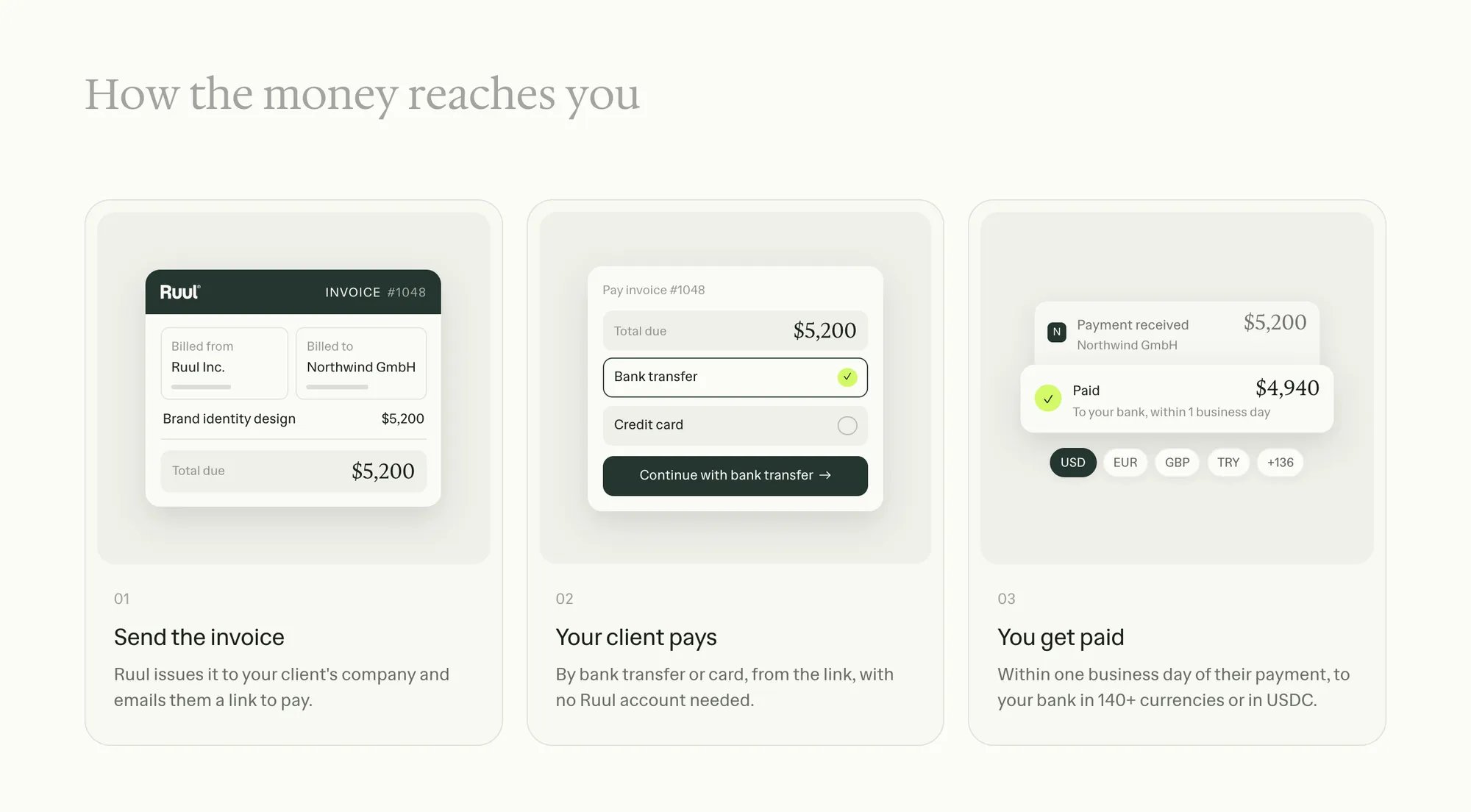
The final step is infrastructure. You need a way to invoice clients, collect payment, and access your money, without spending weeks registering a company or navigating cross-border payment systems.
Ruul handles this. As the legal counterparty, Ruul contracts with you, issues the invoice to your client, collects payment, and pays you within one business day after your client pays. No company registration required. No setup fees. No monthly subscription. Just a 5% commission when you get paid.
More than 240,000 freelancers use Ruul to invoice clients in 190 countries, with more than $1.18 billion in total transactions and a 96.4% satisfaction rate. Teams at the UN, McKinsey, Toyota, Klarna, and MIT trust the platform on the client side.
Whatever path you have chosen from this guide, the work is yours to do. The payment infrastructure is already in place.
Create your free account and send your first invoice.
Written by · Senior Product Marketing Specialist