Crypto payments for freelancers
Learn the pros and cons of crypto payments for freelancers, including speed, volatility, fees, compliance, and client expectations.


Summary
Stick to stablecoins like USDC or USDT on a cheap network such as Polygon. In most countries, crypto is income at its value on the day you receive it. Log the date, amount, value and transaction ID of every payment.
On this page
- The crypto payment landscape for freelancers
- The framework that matters: Volatile crypto vs. stablecoins
- Why clients pay in crypto
- Why you might accept crypto
- Why you might not accept crypto
- Setting up to receive crypto payments
- Network fees: What you need to know
- Tax implications: Read this section carefully
- Documenting crypto payments on an invoice
- The client conversation
- What Ruul offers for crypto-adjacent payments
- The bottom line
Disclaimer: Cryptocurrency tax treatment varies by jurisdiction. In most countries, receiving crypto as payment for services creates an income tax obligation at the time of receipt, and holding crypto that later changes in value may trigger capital gains or losses when you sell or convert it. This article explains the general framework, not jurisdiction-specific rules. Consult a qualified tax professional before accepting crypto payments.
Some clients now offer to pay in crypto, particularly across borders and in the web3 and technology industries.
This guide explains what crypto payments actually mean for your income, your setup, and your taxes, and gives you a clear framework for deciding whether accepting crypto makes sense for you.
The crypto payment landscape for freelancers
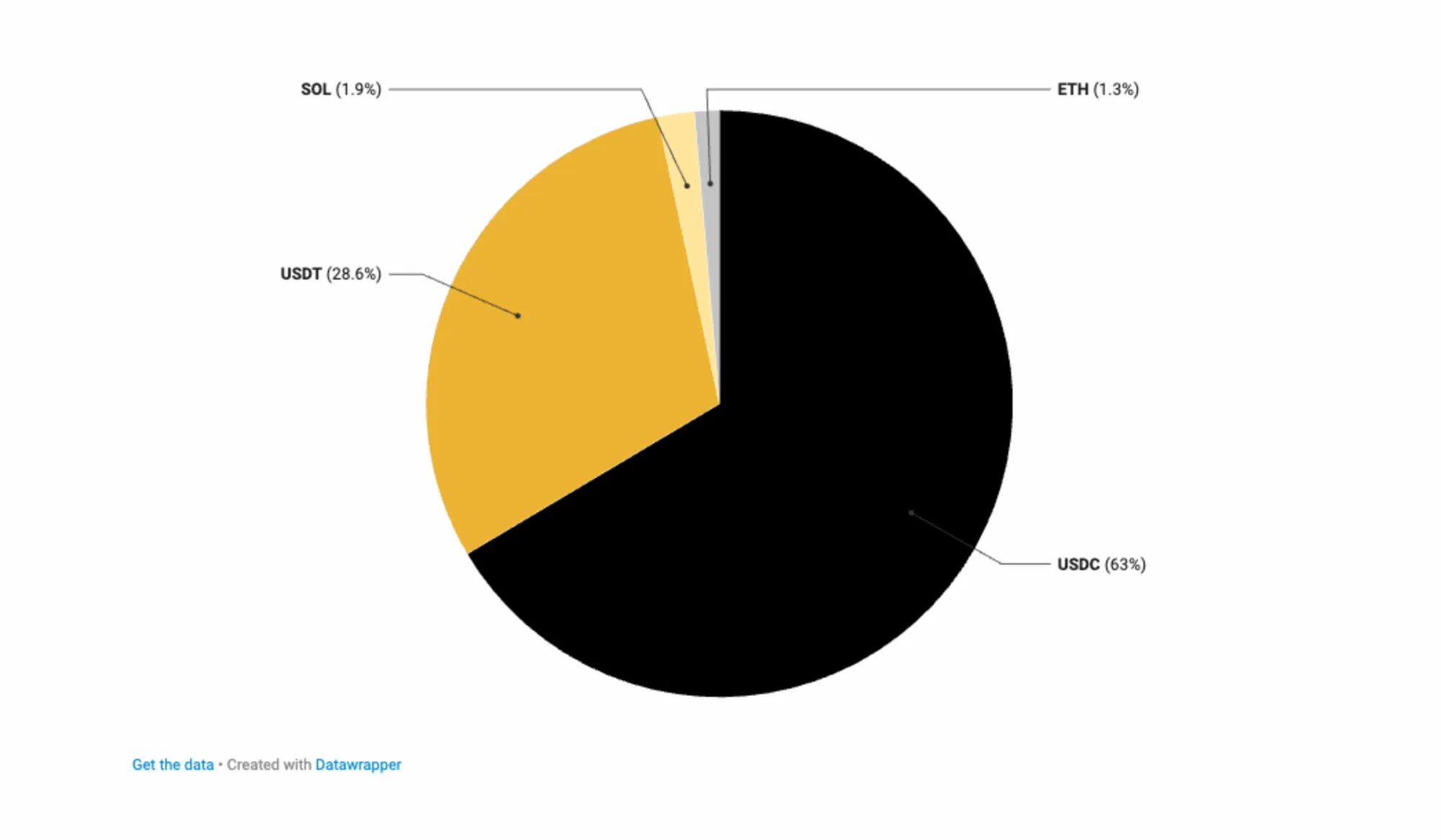
The clearest numbers come from the crypto industry itself. In Pantera Capital’s Blockchain Compensation Survey, with more than 1,600 responses from crypto-industry professionals in 77 countries, the share paid in crypto tripled from 3% in 2023 to 9.6% in 2024. Among those paid in crypto, stablecoins made up more than 90% of salaries: 63% in USDC and 28.6% in USDT.
For freelancers, the relevant shift is not that crypto is becoming universal. It is that crypto is becoming normal in specific industries and client segments, and the tools to handle it professionally now exist.
That said, most corporate clients, enterprise companies, and traditional businesses still pay in fiat. The expectation that you should accept crypto is concentrated in web3 companies, crypto projects, and individual clients with existing digital asset holdings.
The framework that matters: Volatile crypto vs. stablecoins
Before anything else, you need to understand this distinction. It determines your risk, your tax complexity, and your practical options.
Volatile cryptocurrencies
Bitcoin, Ethereum, and similar assets fluctuate significantly in price. A payment in ETH worth $150 today might be worth $100 or $200 in a week. You are exposed to the same kind of risk as holding a foreign currency, but with far larger swings.
Receiving volatile crypto means you are making an implicit financial decision the moment you accept payment. You are betting, or at minimum accepting, whatever the market does between receipt and conversion. For most freelancers focused on getting paid for their work, this is an unnecessary complication.

Stablecoins
Stablecoins are designed to hold a steady value against a fiat currency, usually the US dollar. USDC (issued by Circle) and USDT (issued by Tether) are the two largest, and both say their reserves cover every coin in circulation. When a client sends you 1,000 USDC, you receive close to $1,000 of value, and it does not swing the way Bitcoin does. The peg can still slip in a crisis: USDC briefly lost it in March 2023, when $3.3 billion of its reserves sat at the failed Silicon Valley Bank, and regained it once those deposits were secured.
Stablecoins combine the infrastructure advantages of crypto payments (fast settlement, no banking intermediary, global reach) with the price predictability of fiat. For most freelancers, stablecoins are the only form of crypto payment that makes practical sense. The rest of this article applies that lens consistently.
Why clients pay in crypto
Understanding a client’s motivation helps you have the conversation confidently.
Faster international transfers are the most common reason. Wire transfers take days and carry significant fees. The World Bank’s Remittance Prices Worldwide database put the global average cost of sending $200 abroad at 6.36% in Q3 2025, and 14.99% when the money went through a bank. A stablecoin transfer settles in minutes, and the network fee is usually a small fraction of that, though exchanges charge their own fees when you buy or sell.
Some clients, particularly in the web3 and crypto industries, hold most of their treasury in crypto and prefer to pay from existing holdings without converting to fiat first. Others are in markets where sending international wire transfers is difficult or restrictive.

Privacy preferences and the norms of the web3 industry also play a role, although every on-chain payment is publicly visible and exchanges in a growing number of countries report their users’ transactions to tax authorities. In crypto-native companies, paying in USDC is as normal as paying by ACH in a traditional business.
Why you might accept crypto
There are genuine advantages, and they are worth naming plainly.
Speed. Stablecoin transfers typically settle in minutes regardless of time zones, weekends, or bank holidays. If a client in Singapore is paying you at midnight on a Friday, you can have funds in your wallet before you sleep.
Cost on international payments. Traditional cross-border payments carry fees in both percentage terms and flat charges, plus currency conversion spreads. Crypto networks, particularly Layer 2 solutions and alternative blockchains, have substantially lower transaction costs. The savings are most significant on frequent or large international invoices.
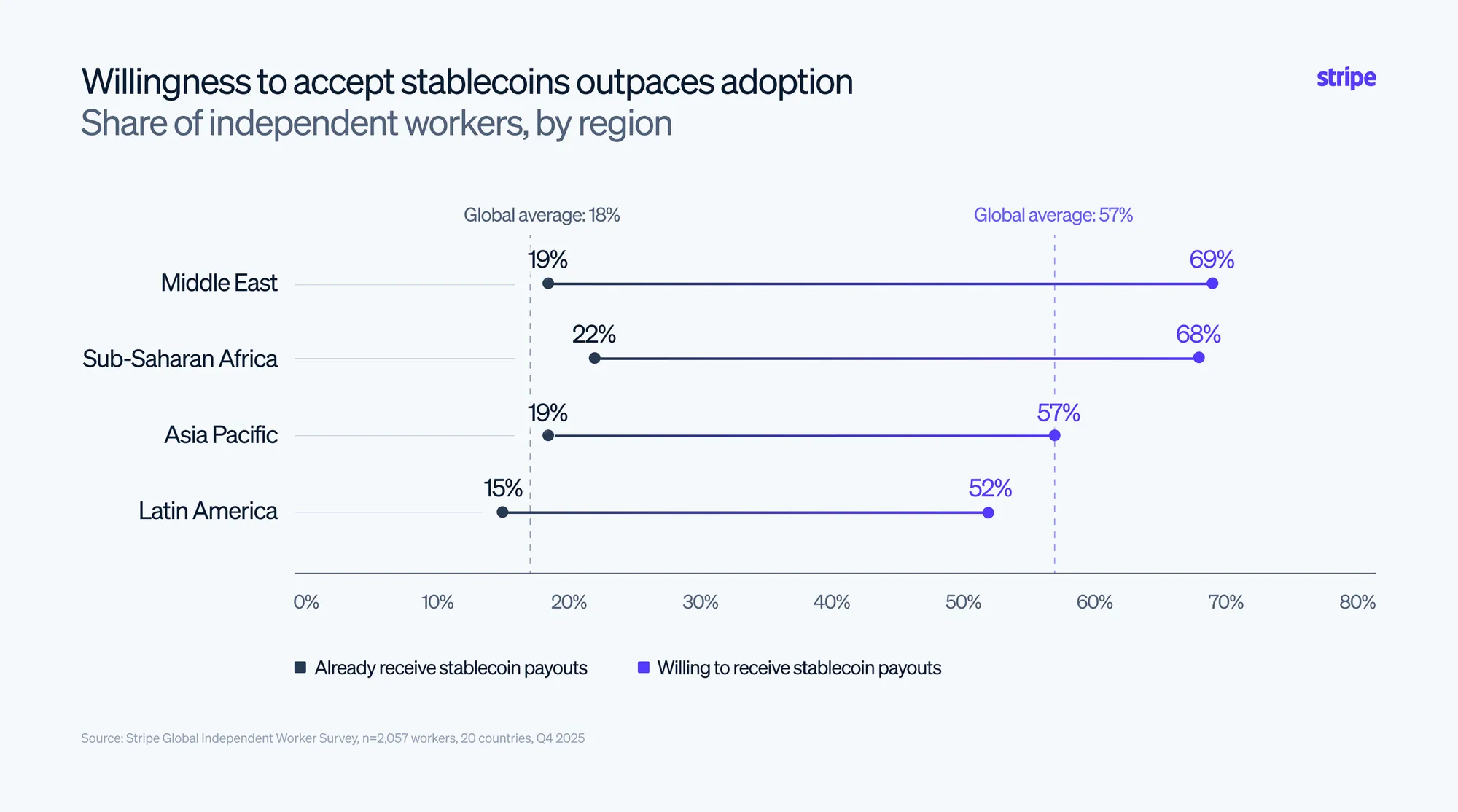
Access in underbanked markets. If you are based in a country with limited banking infrastructure or currency controls, a stablecoin wallet can work where a bank account cannot. In Stripe’s late-2025 survey of more than 2,000 independent workers in 20 countries, 22% of those in Sub-Saharan Africa, 19% in Asia Pacific and 15% in Latin America were already paid in stablecoins, and 57% overall said they would take stablecoins if their platforms offered them.
No chargebacks. A confirmed on-chain transfer can’t be reversed by the sender, so a client can’t claw a payment back the way a card payment can be disputed. For service providers who have dealt with payment disputes or fraudulent reversals, this is meaningful. One caveat: the issuers of USDC and USDT can block an address under their terms, and coins in a blocked address can’t be moved.
Client fit. If your clients are crypto companies or web3 projects, accepting crypto payment is not just convenient, it is often expected.
Why you might not accept crypto
The case for crypto is not universal. These disadvantages are real.
Volatility risk for non-stablecoins. If a client insists on paying in Bitcoin or Ethereum rather than a stablecoin, you carry price risk from the moment of receipt to conversion. A payment that looked like $2,000 can be worth $1,400 before you can sell. Unless you actively want crypto exposure, this is a risk with no upside from a payment perspective.
Tax complexity. This is the most underestimated issue. Receiving crypto income creates immediate tax reporting obligations in most jurisdictions, and if you hold the crypto and later sell, swap or spend it, that is a second taxable event, with a gain or loss measured against its value on the day you received it. The structure is not simple. More on this in the tax section.

Limited client adoption outside crypto industries. Most Fortune 500 companies, agencies, and traditional businesses will not pay in crypto. Do not expect it to become your primary payment method unless your client base is specifically crypto-adjacent.
Conversion adds steps and fees. Getting crypto into your bank account requires going through an exchange, which involves fees, verification requirements, and sometimes withdrawal limits. It is not as seamless as a bank transfer arriving directly.
Regulatory uncertainty. The legal status of crypto varies by country. In the EU, the MiCA rules now apply in full, and licensed exchanges are winding down services for stablecoins without EU authorisation, such as USDT. The US passed a federal stablecoin law, the GENIUS Act, in July 2025, and its main rules are expected to take effect in January 2027. Elsewhere, the rules can be unsettled or restrictive, so check the regulatory environment where you operate before accepting your first payment.
Setting up to receive crypto payments
If you have weighed the above and decided to move forward, here is what the setup actually involves.
Choosing a wallet
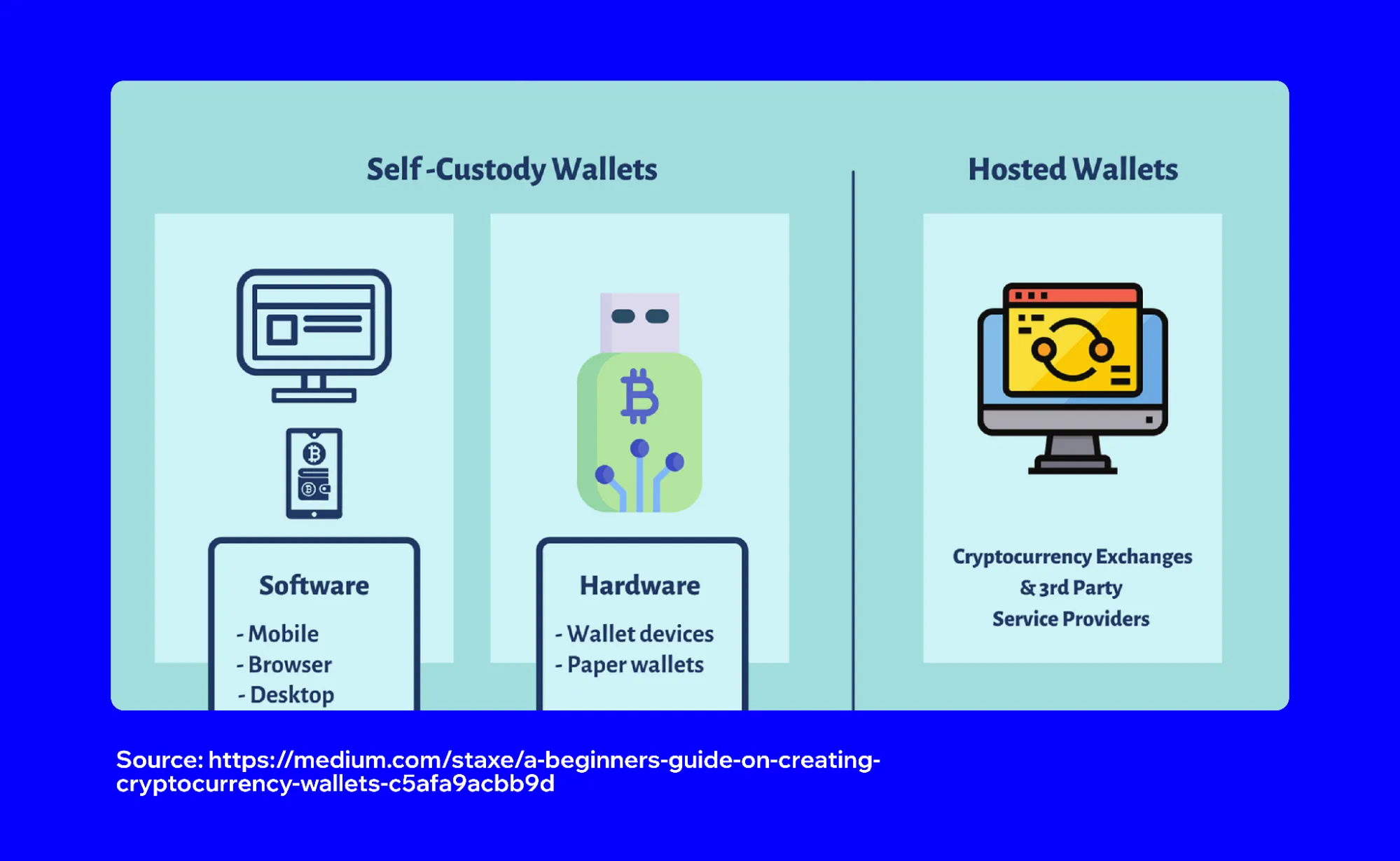
A crypto wallet is where received funds land. You have two main categories.
Custodial wallets are managed by an exchange or platform. Coinbase, Kraken, and similar platforms hold your private keys for you. This is simpler: you sign up, complete identity verification, and get a wallet address. The trade-off is that you are trusting a third party with access to your funds.
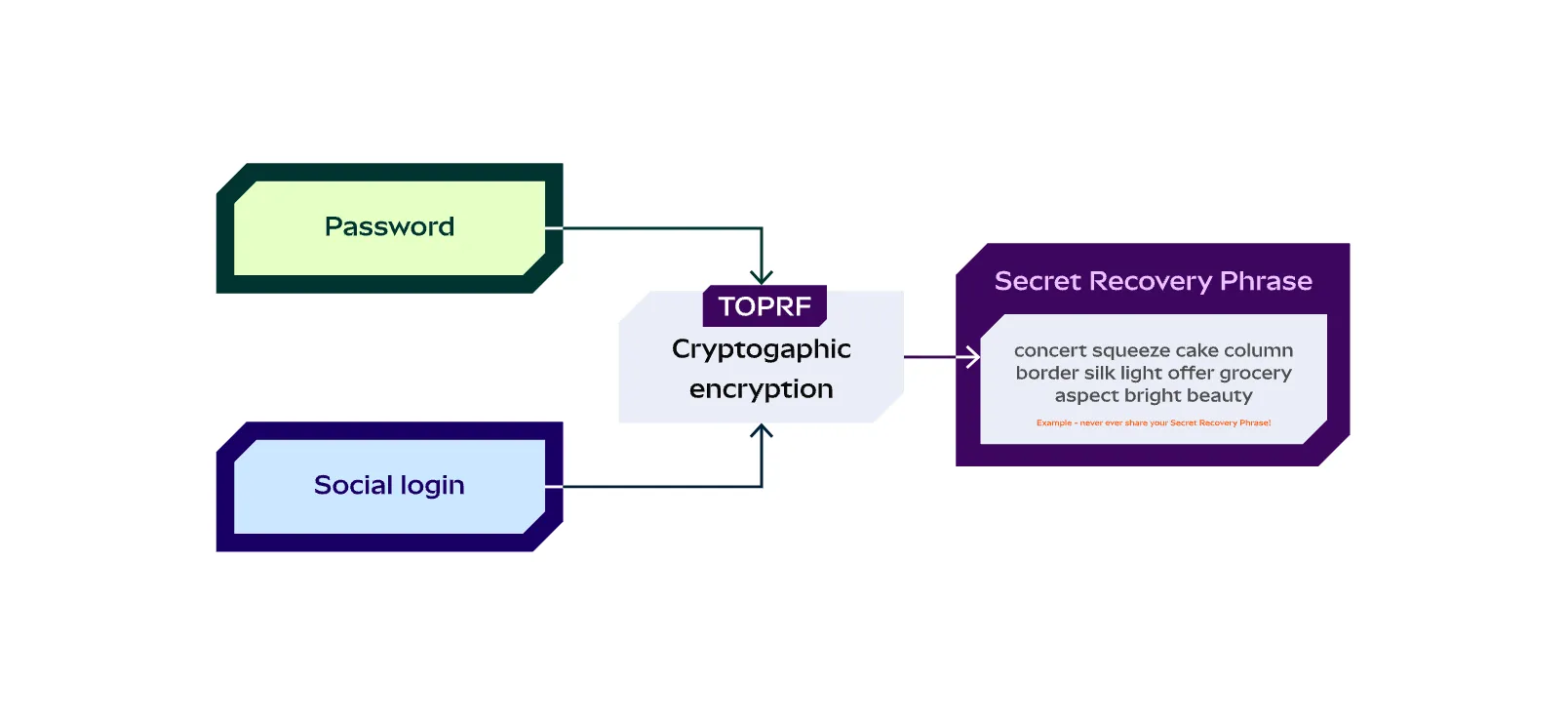
Non-custodial wallets give you control of your own keys. MetaMask, Trust Wallet, and similar apps generate your private keys, so no exchange can freeze your account. The issuers of USDC and USDT can still block an address under their terms, even one you control. The trade-off is that recovery is up to you: if you lose your recovery phrase and every backup of it, no one can restore your wallet. MetaMask’s social login replaces the written phrase with your Google, Apple or Telegram account plus a password, and then that password is what you can’t lose.
For most freelancers starting out, a reputable custodial exchange wallet is simpler to manage. If you are receiving regular, significant payments in crypto, a non-custodial wallet with hardware backup is more secure.
Which cryptocurrency to accept
Accept stablecoins, specifically USDC or USDT. Both track the US dollar, both have high liquidity, and both are widely supported by exchanges for conversion to local currency. If you live in the EU, choose USDC: it is issued under an EU licence, while exchanges licensed under MiCA are dropping USDT for EU clients.
If a client wants to pay in Bitcoin or Ethereum, you can accommodate that, but convert promptly rather than holding. Every day you hold a volatile asset after receiving it as income is another day of price exposure on income you have already earned.
Decide also which network you want to receive payment on. USDC runs natively on Ethereum, Polygon, Arbitrum, Base, Solana and more than 30 other networks, but no longer on Tron. Almost all USDT is issued on Tron and Ethereum. This matters because transaction fees vary significantly by network, and an exchange only credits deposits on the networks it supports. More on this below.

Sharing payment details with clients
Your wallet address is a long alphanumeric string. When sharing it with a client for payment, specify both the address and the network. “Please send USDC to [address] on the Polygon network” is more useful than just an address. If a client sends USDC on a network your exchange doesn’t support, the deposit may never be credited. Kraken, for example, says recovery of such deposits is not guaranteed, and its recovery fees run up to $500.
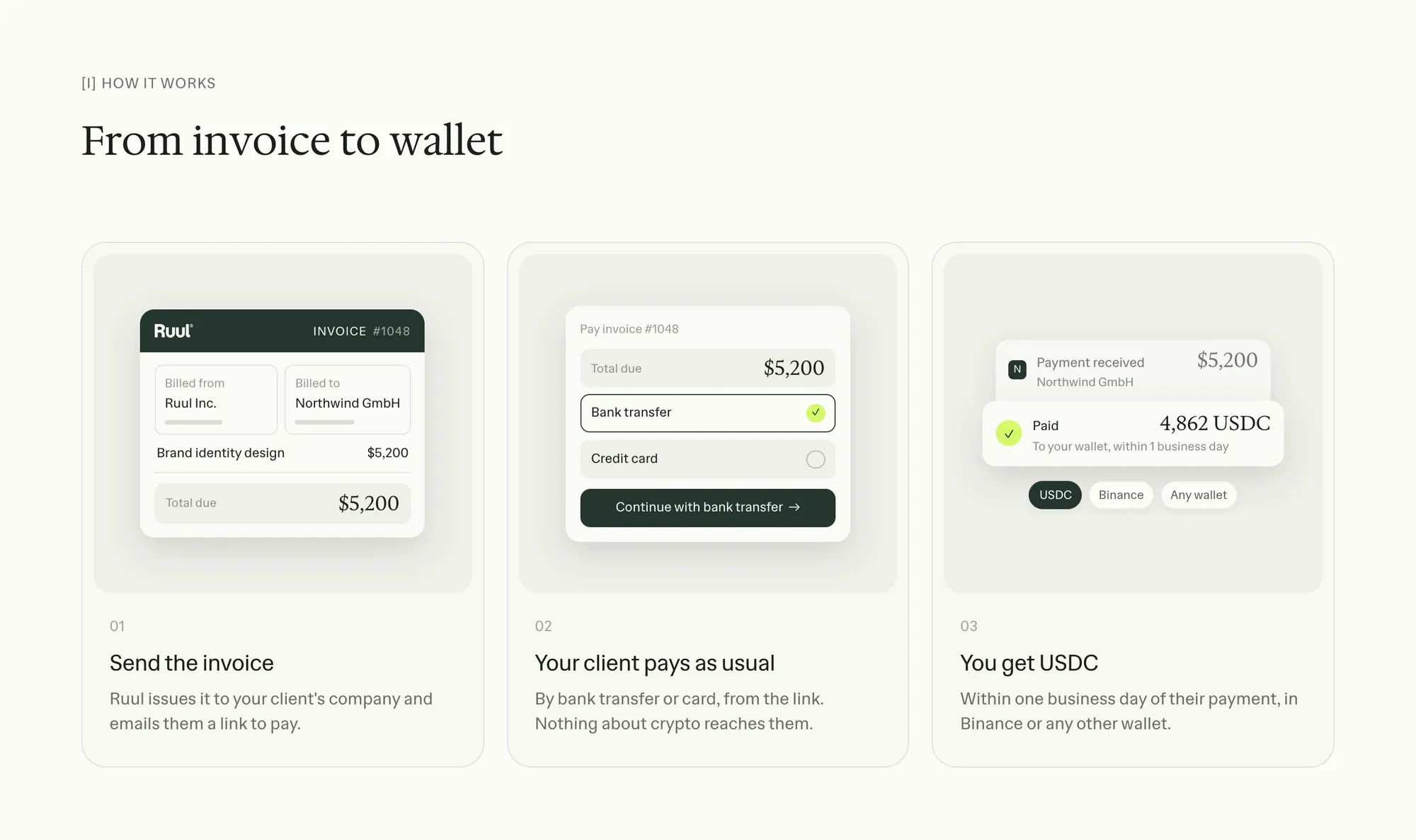
Put payment details directly on your invoice. A clear “Crypto Payment” section with your wallet address, the network, and the accepted stablecoin eliminates most confusion. If you invoice through Ruul, it works differently: Ruul issues the invoice to your client’s company as the legal counterparty, and your client pays by bank transfer or card, so no wallet address goes on the invoice. You can still choose to get paid in USDC with Crypto Payout, covered at the end of this guide.
Converting to local currency
When you are ready to use your earnings, you convert through an exchange. Transfer your stablecoins to a reputable exchange that supports your local currency, sell them for fiat, and withdraw to your bank account. Each exchange has its own fees and withdrawal requirements. Compare them before committing to one.
The process adds a step that traditional payments do not require. Factor this into your time and cost calculations.

Network fees: What you need to know
Different blockchains have different fee structures, and fees change with network demand. Approximate figures as of early November 2026: Polygon, Arbitrum, Base and Optimism typically charge a fraction of a cent per transfer. Ethereum mainnet costs more, from about a cent on a quiet day to several dollars when the network is busy. On Tron, where about half of all USDT sits, the sender pays in TRX for the network’s energy: a USDT transfer burns about 6 to 13 TRX, or $2 to $4, unless the sender has staked or rented energy.
The practical takeaway: specify a low-fee network that both your client’s wallet and your exchange support. For routine invoice payments in USDC, Polygon, Arbitrum or Base keep the network fee negligible for both of you.
These figures are approximate and subject to change based on network conditions. Always verify current fees before promising a client what their transaction will cost.
Tax implications: Read this section carefully
This is where most crypto payment guides either oversimplify or avoid the subject.
Income at time of receipt
In most jurisdictions, including the United States, receiving cryptocurrency as payment for services creates an immediate income tax obligation. The IRS FAQ on digital asset transactions is explicit: the fair market value of the digital assets in US dollars at the time of receipt is ordinary income, subject to income tax and self-employment tax for independent professionals.

This applies to stablecoins as well. Receiving 1,500 USDC for a project is receiving $1,500 of ordinary income. It must be reported.
The capital gains layer
Here is where volatile crypto creates a second problem. If you receive Bitcoin worth $1,000 and it drops to $700 before you sell, you owe income tax on $1,000 received. When you sell at $700, you realize a $300 capital loss. In the US, that loss can offset capital gains and up to $3,000 a year of ordinary income, but you still owe tax on $1,000 of income while holding $700. That is not a hypothetical edge case. It is the structural reality of holding volatile crypto received as payment.
Stablecoins largely sidestep this. If you receive 1,000 USDC and convert it promptly to local currency, the gain or loss on that sale is close to zero, because the price barely moves. You report $1,000 of income, you convert about $1,000, and the sale is a minor entry on your return. The simplicity is one of the strongest arguments for stablecoins over volatile crypto.
Record-keeping is non-negotiable
For every crypto payment you receive, record the date, the amount in crypto, the fiat-equivalent value at time of receipt, the transaction ID, and the client. This is your audit trail.
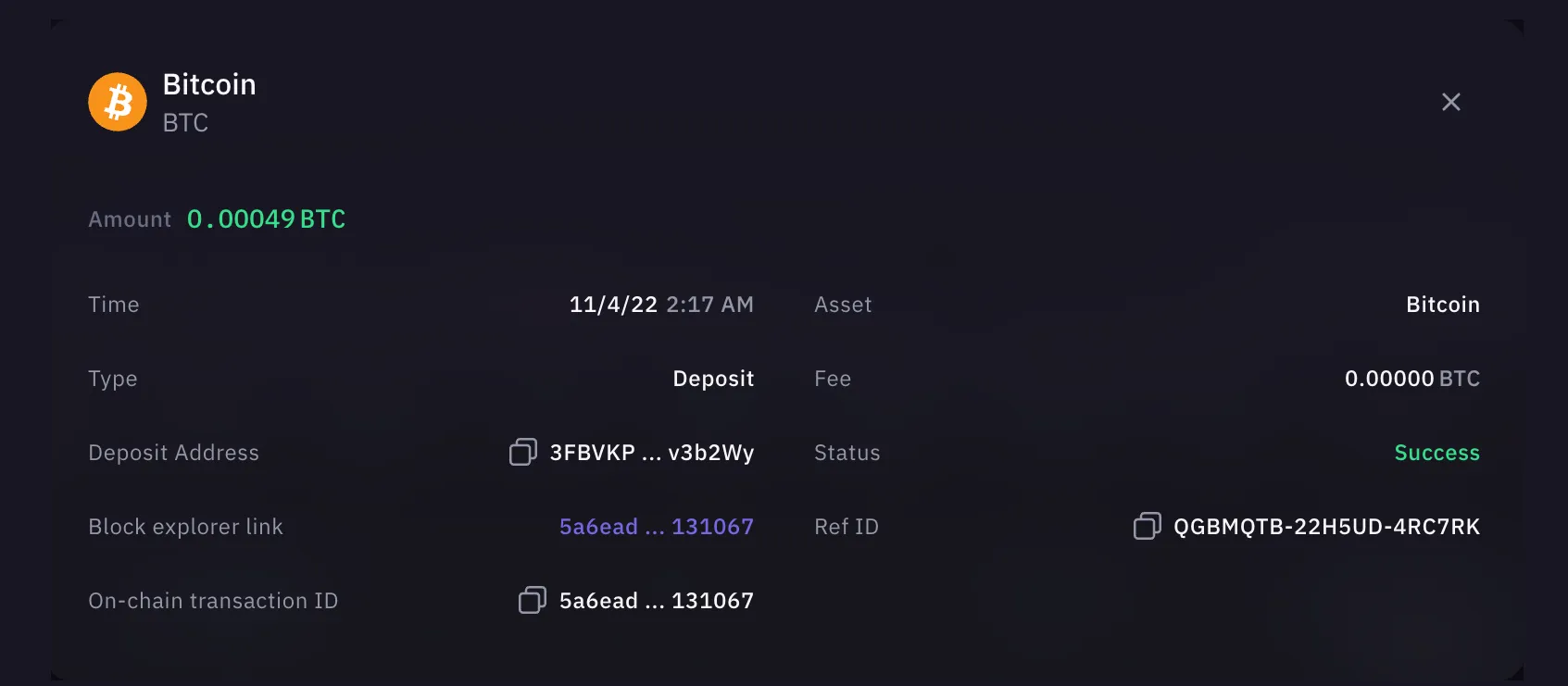
Tax law around digital assets continues to evolve. In the EU, the DAC8 directive requires crypto service providers to collect data on their EU-resident users’ transactions from January 2026, and the first reports, covering 2026, reach tax authorities by 30 September 2027. The UK collects the same kind of data from January 2026, with the first reports due by 31 May 2027. In the US, exchanges report your crypto sales to the IRS on Form 1099-DA, starting with sales made in 2025. Your tax office will see your exchange’s numbers, so keep your own records and make sure they match.
In the US, Congress is weighing bills that would change how small crypto payments and stablecoins are taxed. Until one of them becomes law, the current rules apply.
For the mechanics of crypto taxation in your specific jurisdiction, including country-specific rules and capital gains thresholds, consult a qualified tax professional. The stakes of getting this wrong are real.
Centralizing your invoices and transaction records makes tax season significantly less painful. Ruul keeps your records in one place: your invoices, your tax forms, and a transaction summary you can export for your accountant.
Documenting crypto payments on an invoice

A crypto-compatible invoice contains the same information as any professional invoice, plus three additions: the wallet address for payment, the network to use, and a clear statement that the amount is denominated in your currency and payable in the equivalent stablecoin value at time of transfer.
State the payment terms as specifically as you would for any other method. “Net 14, payable in USDC on Polygon” is clear. Vague language creates room for delay. Specific language closes it.
Keep the transaction hash (the unique on-chain ID for the payment) once received. It is your proof of payment, equivalent to a wire confirmation number, and you will need it for tax records.
The client conversation
Raising crypto as a payment option does not need to be awkward. Include it in your payment terms the same way you would list bank transfer or PayPal.
Your invoice or onboarding documents can state: “I accept USDC or USDT on [network]. Payment instructions available on request.” Clients who are set up for crypto will recognize this immediately. Clients who are not will simply use a different method.
If a client wants to pay in a cryptocurrency you are not set up for, the answer is simple. Either ask them to convert to a stablecoin you accept before sending, or set up the relevant wallet first. Do not accept payment in an asset you have no plan for.

Recurring crypto payment is technically possible, but adds complexity around price tracking and record-keeping for each transaction. If you work with retainer clients, subscription invoicing is the simpler path: your client approves once and saves a card, and Ruul charges it every week or month and issues the invoice. Subscription payments go to a bank account, though, because Crypto Payout works for the invoices you send.
On-chain transactions confirm faster on some networks and slower on others. If a client asks how long a crypto payment takes to clear, the honest answer depends on the network. Details on payment processing times across methods are covered separately in Ruul’s guide to how long freelance payments take.
What Ruul offers for crypto-adjacent payments
If the wallet setup, network selection, and tax tracking described above sound like more infrastructure than you want to manage, that is a legitimate conclusion. Crypto payment has real advantages for some freelancers, particularly those dealing with international clients in markets with poor banking infrastructure.
Ruul’s Crypto Payout takes the client side out of it. You invoice as usual: Ruul issues the invoice to your client’s company as the legal counterparty, and your client pays by bank transfer or card, so nothing about crypto reaches them. You get paid in USDC within one business day of their payment, for 1.5% on top of Ruul’s 5%. You verify your ID and address once, and you declare the income where you live, as with any payment.
If you want fast international payment without crypto at all, Ruul pays you in 140+ currencies within one business day of your client’s payment, with no company registration required. You can invoice clients in 190 countries without setting up either a registered business or a crypto wallet.
The bottom line
Crypto payment offers real advantages for specific freelancers: those working with web3 clients, those dealing with cross-border payments in markets with high banking friction, and those whose clients actively hold and prefer to pay in digital assets. Stablecoins make these advantages accessible without the volatility risk that makes volatile crypto impractical for most people getting paid for their work.
The tax complexity is real and should not be underestimated. Get your records in order before your first crypto payment, not after.
If you want to get paid in USDC while your clients pay the usual way, start with Crypto Payout.
Written by · Co-founder