What can you sell on Gumroad?
What can and can't you sell on Gumroad? Here is a guide to understand the limits and benefits of Gumroad for your product.


Summary
You can sell ebooks, courses, templates, memberships, software and paid calls, but not physical goods or ongoing client work. Gumroad takes 10% plus $0.50 per direct sale with card fees on top, or a flat 30% via Discover.
On this page
You’re probably here because Gumroad caught your eye, and you’re wondering not just what you can sell here, but also what products are in demand on Gumroad.
From digital downloads to memberships, I’ll walk you through types of products creators successfully sell on Gumroad, so you can decide which fits your business best.
Ready? Let’s dive in.
Digital products
Digital products are everywhere right now.
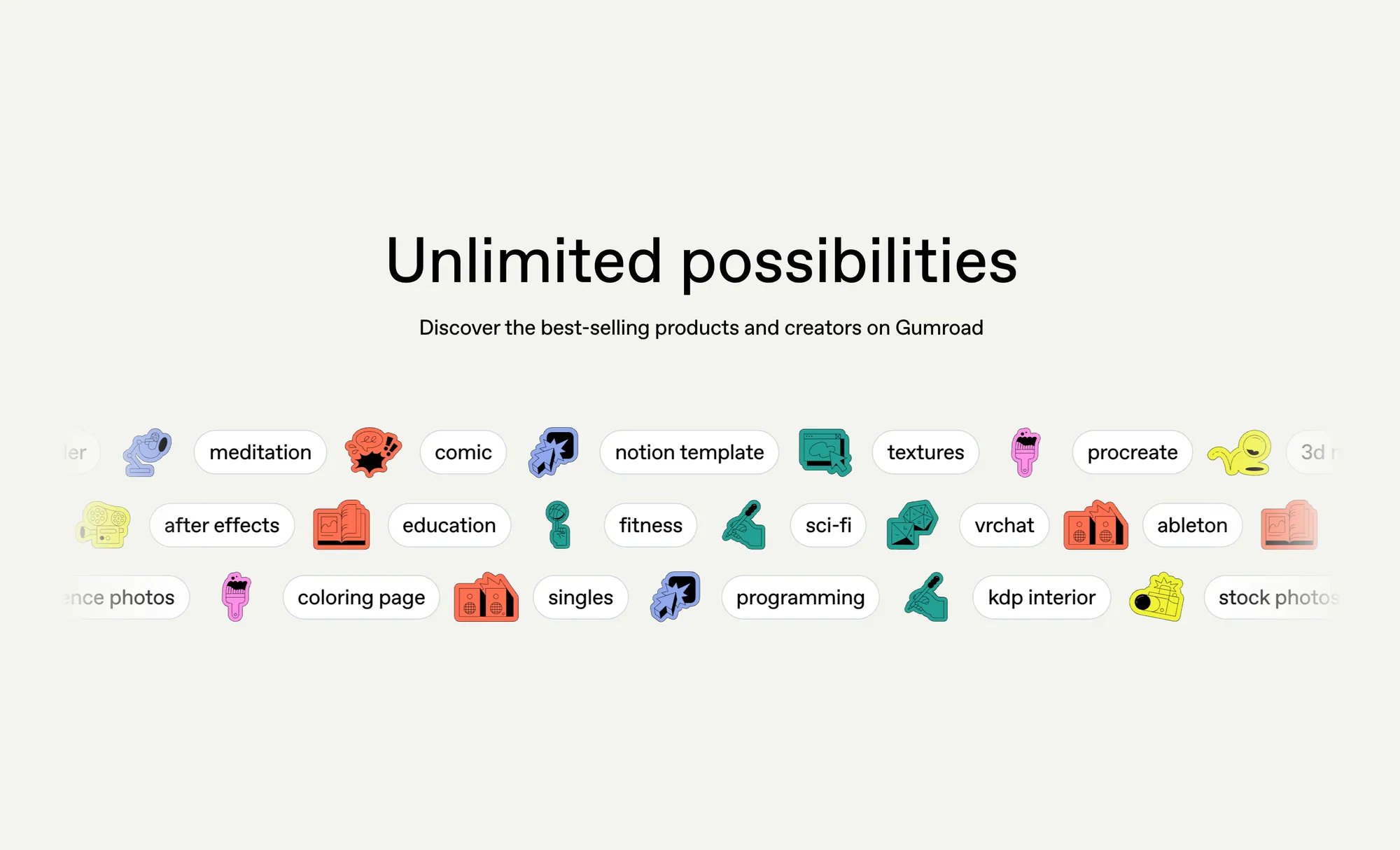
Gumroad announces that they host 1.6 million free and premium digital products.
And yep, digital goods are among the very first things you can start selling on Gumroad.
You create your product and find people to buy it or let Gumroad sell it for you.
PS: Gumroad takes 10% + $0.50 per transaction on profile/direct-link sales (and 30% if the sale comes via Discover).
On direct sales, card processing of 2.9% + $0.30 (or PayPal’s fee) comes on top. The 30% Discover fee already includes processing.
Best digital products to sell on Gumroad?
Now let’s dive straight into the most popular digital products you can actually sell 👇🏻
1. eBook
You’ve seen eBooks everywhere by now for good reason. They’re one of the simplest digital products you can launch on Gumroad.
The catch? You don’t need to be a bestselling author. What really sells are practical, problem-solving guides written by people who’ve actually done the work.
Example:
- A marketer could share “10 Campaigns That Brought Me Clients.”
- A developer might write “How I Built My First App in 30 Days.”
- A freelancer could package “My Proposal Template That Wins Projects.”
Notice these aren’t abstract titles. They’re specific, experience-driven, and instantly useful to someone starting out.
Now, let’s look at a real example on Gumroad 👇🏻
Example: ChatGPT for students eBook
This eBook shows students how to squeeze the most out of ChatGPT. According to the description, it’s packed with 200+ prompts that actually help you get stuff done.
What’s cool? It’s not just another generic ChatGPT prompts eBook. The seller went straight for students, promising “study smarter, not harder.” It’s a perfect example of niching down, taking a huge topic and making it super relevant for a specific crowd.
2. Education
Many creators on Gumroad sell**** educational material. If you’re good at a skill, whether it’s a freelance talent, an online tool, a language, or even a hobby, you can turn it into a product on Gumroad or similar platforms.
Your course can target beginners, pros, or somewhere in between. You could teach a student, a peer, or another professional. The format is up to you.
Here’s how you can deliver your course:
1. Video courses: Break your content into short, digestible chunks. Students retain more when information is presented in manageable pieces.
2. Live sessions: Teach one-on-one or in small groups online. Real-time interaction keeps people engaged and allows you to answer questions immediately.
3. eBooks: You can also package your course as an eBook.
You can also add value with community access. Hosting a Discord or Slack group lets students ask questions, share ideas, and support each other. It’s optional, but it makes your course feel more complete.
One practical note: Gumroad hosts your files, so buyers can stream your videos or download your eBooks right after they pay. Live classes are the exception. You run those on Google Meet or Zoom and share the link through Gumroad.
Next, let’s look at a concrete example of a course on Gumroad.
Example: Digital art and illustration tutorial
One Gumroad creator put together an insanely detailed, hands-on course for anyone into digital art. We’re talking pro-level brushes, custom color palettes, practice exercises, and tutorial books, all in one package.
To make the learning experience even richer, they added 59 Procreate files + process videos and 59 Photoshop (PSD) files. Additionally, students receive lifetime updates, ensuring their investment continues to pay off.
3. Template
Another digital product you can sell on Gumroad is templates.
First option: social media templates.
These are ready-to-go designs you can open in Canva, Figma, or Adobe. Customers buy them, drop in their brand assets, and instantly start creating content.
If you design sets specifically for high-demand areas such as technology, finance, health, or personal care, you will stand out much more.
Second option: finance and business management templates.
Digital life is messy, and these templates help organize the chaos. You can build professional-level spreadsheets in Excel or Google Sheets, but ensure they actually make tracking and managing tasks easier.
And then we have modern templates like Notion, Trello, and Asana. (Notion’s definitely the king here, because its learning curve is a bit steeper, I guess.) These are extremely popular for project management, whether within companies, with freelance teams, or for personal productivity.
Now, let’s check out a real example from Gumroad.
Example: Notion template
One creator on Gumroad put up a Notion template they call an “all-in-one productivity system.” The idea? Give people a ready-made, tested, and optimized setup to manage both work and personal life in one place.
The current price is AUD 79 (about $56), and it already has more than 200 ratings. It is pretty solid proof that people find it useful.
Subscription & membership
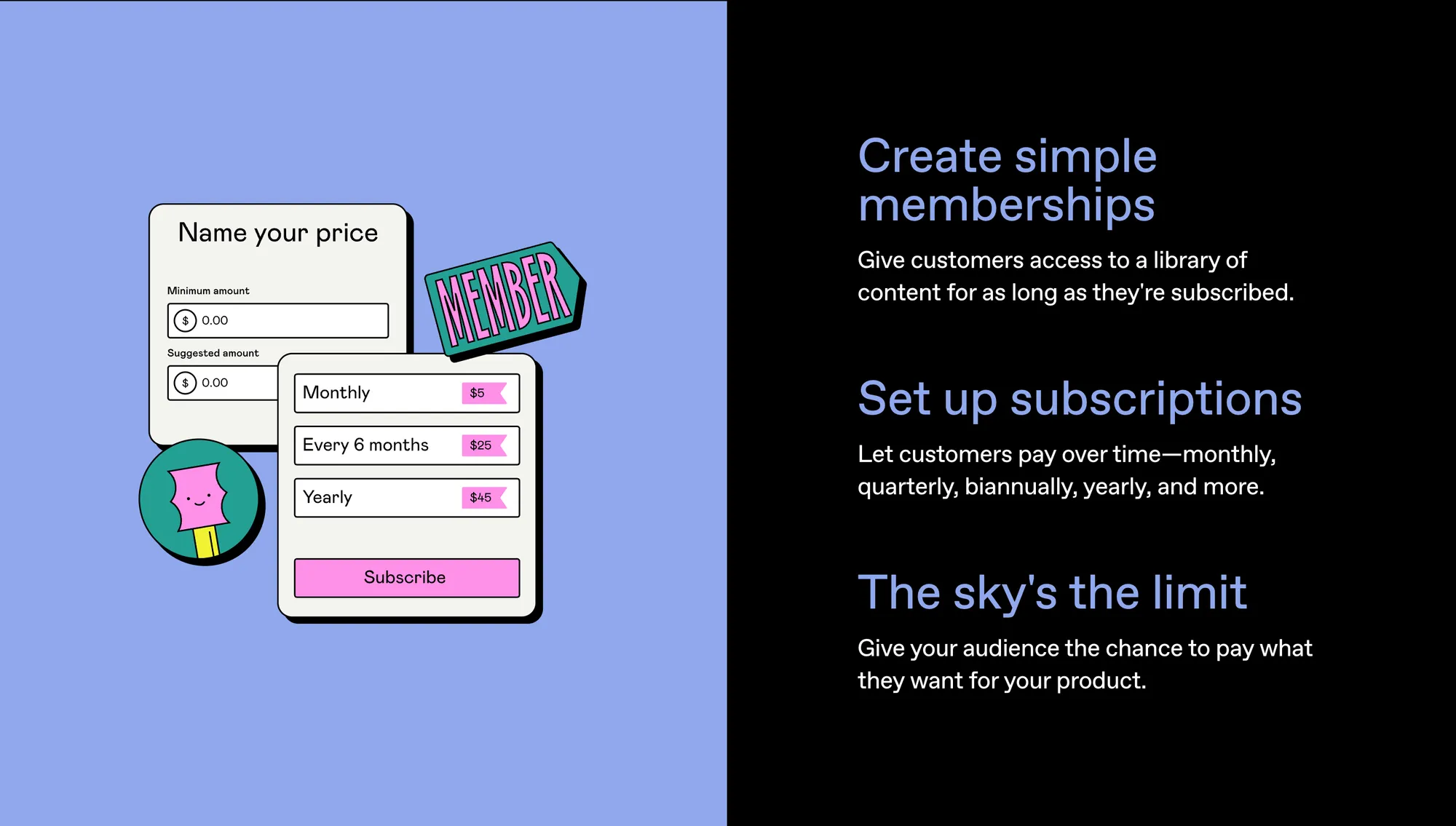
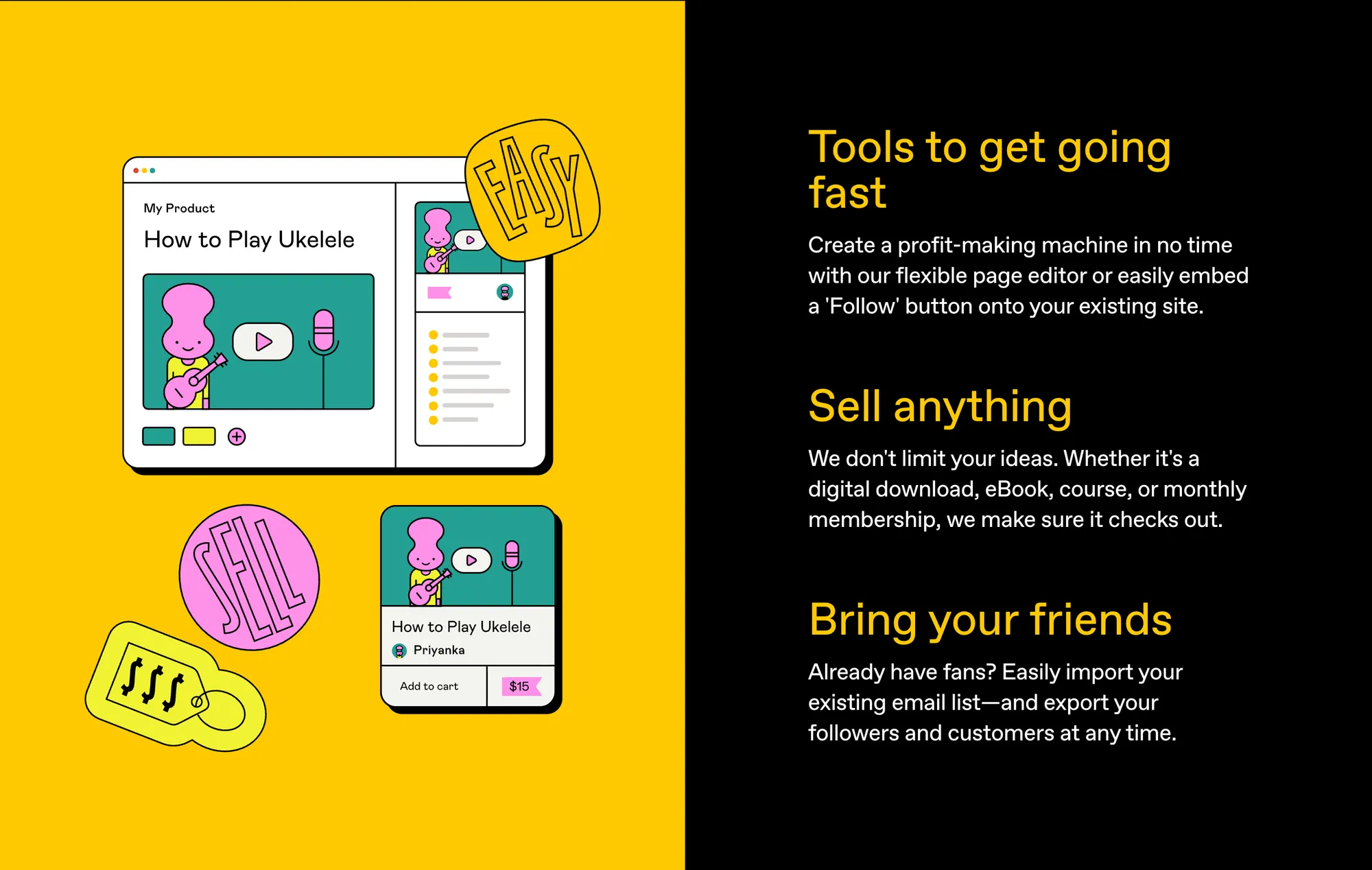
Another solid option on Gumroad is offering subscriptions or memberships.
This model works best for:
- Digital content creators
- Influencers
- Freelancers
Unlike a “sell it once and forget it” digital product, memberships are an ongoing commitment. Subscribers pay you on a schedule, whether monthly, quarterly or yearly, so they expect consistent value in return: fresh content, updates, or perks.
Best subscription-based products to sell on Gumroad?
1. Newsletter
One of the easiest membership ideas is a newsletter.
It can be about any topic or niche. If someone wants access to your insights, they pay to subscribe.
Popular topics are:
- Startup & entrepreneurship trends, new opportunities
- Marketing & growth hacking tips
- Tools, advice, and resources for freelancers or small businesses
- Weekly business strategies and case studies
And then there’s personal development & lifestyle newsletters:
- Mindfulness, meditation, mental health content
- Fitness & nutrition guides, meal plans
- Habit building & motivation hacks
- Weekly goal setting and planning tips
The options are basically endless. Maybe none of the usual ideas fit you. Focus on what you can offer from your experience and knowledge.
For example, if you’re a fitness coach with followers on Instagram or X, you could turn your know-how into a paid newsletter and get your audience to subscribe. Simple as that.
2. Community access
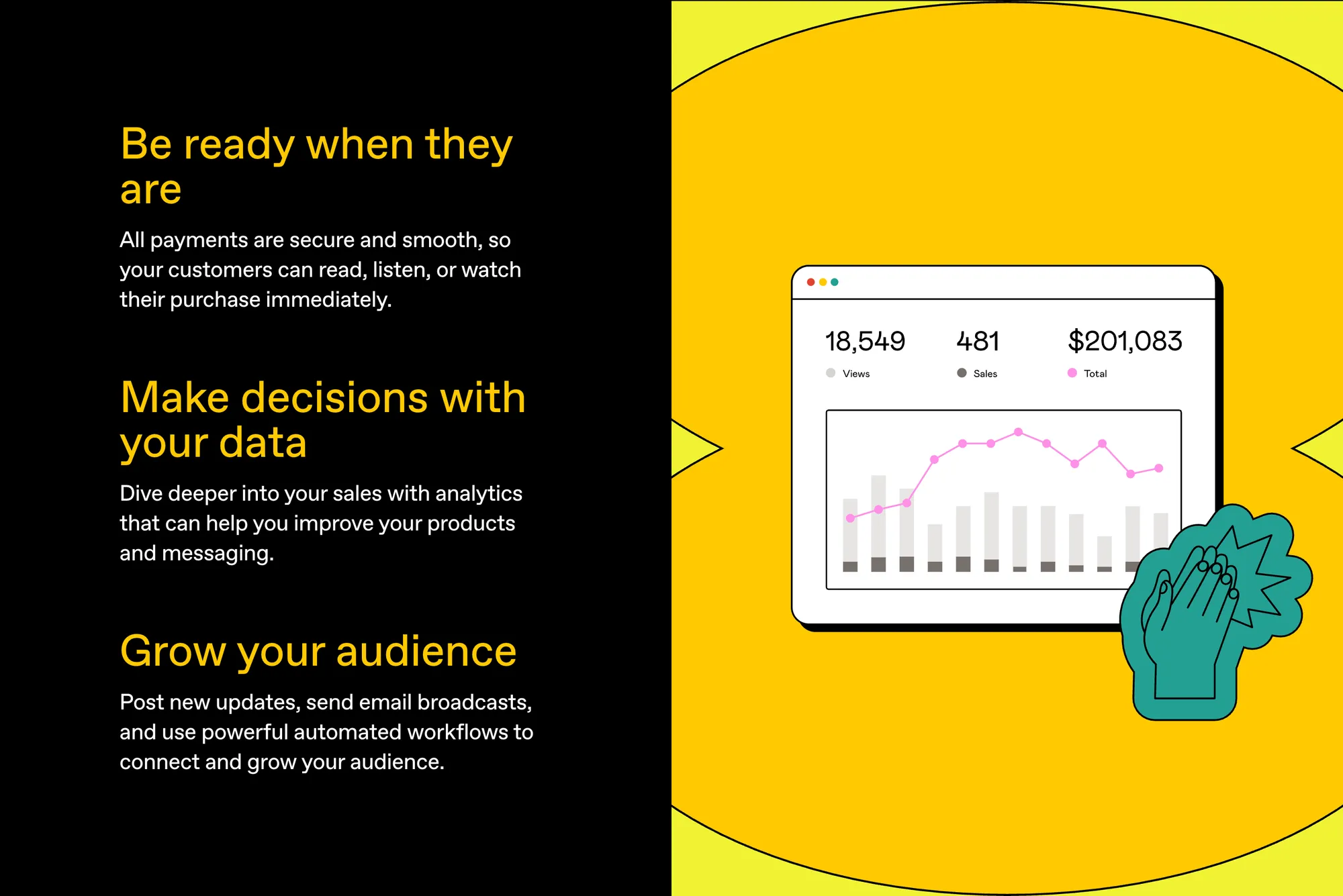
The other subscription/membership idea? Access to a community.
People love connecting with others who share their hobbies or interests. For example, a surfer would happily join an online community of fellow surfers. Same with freelancers jumping into freelancer groups, or whatever niche you’re into.
Plus, community access can also be bundled with digital products. Like, “Buy this product, and get access to my community too.”
This kind of offer boosts the perceived value of your product and makes people more willing to pay that subscription fee.
3. Software
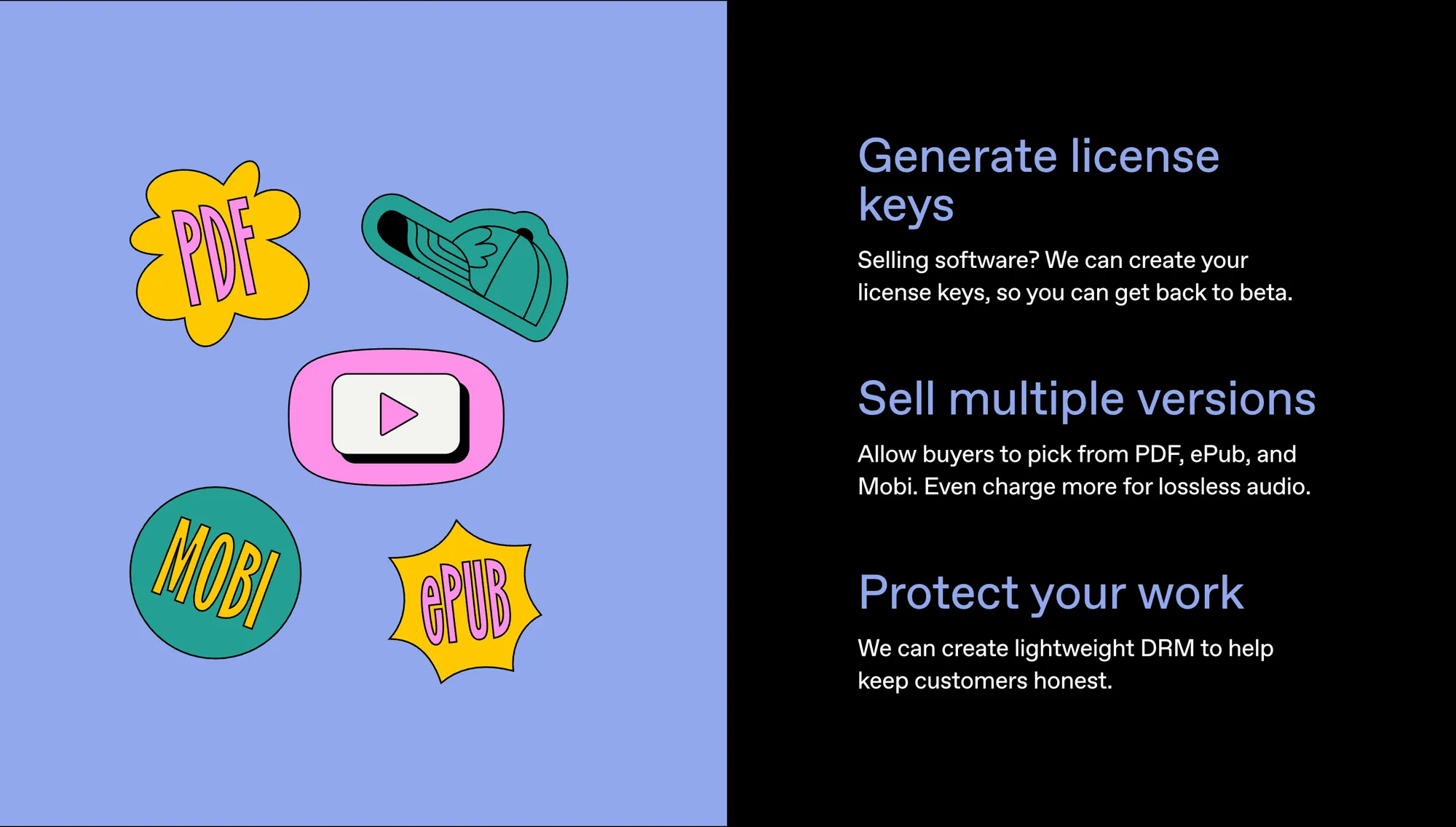
You can also sell software products on Gumroad.
Selling plugins is common. Browser or app extensions are especially hot right now. And the goal of every single one? Solve a particular problem for a particular audience.
Alright, now let me show you a real product example.
Example: Software adding new features to Google Meet
It appears that someone identified gaps in Google Meet and decided to create a plugin. This little software adds more than 25 handy features to Meet.
The seller charges $4 a month for a single license, currently discounted to $1.60, and also sells yearly and team plans. That small fee might not look like much, but it adds up, creating a steady, passive income stream.
4. Subscription-based online services
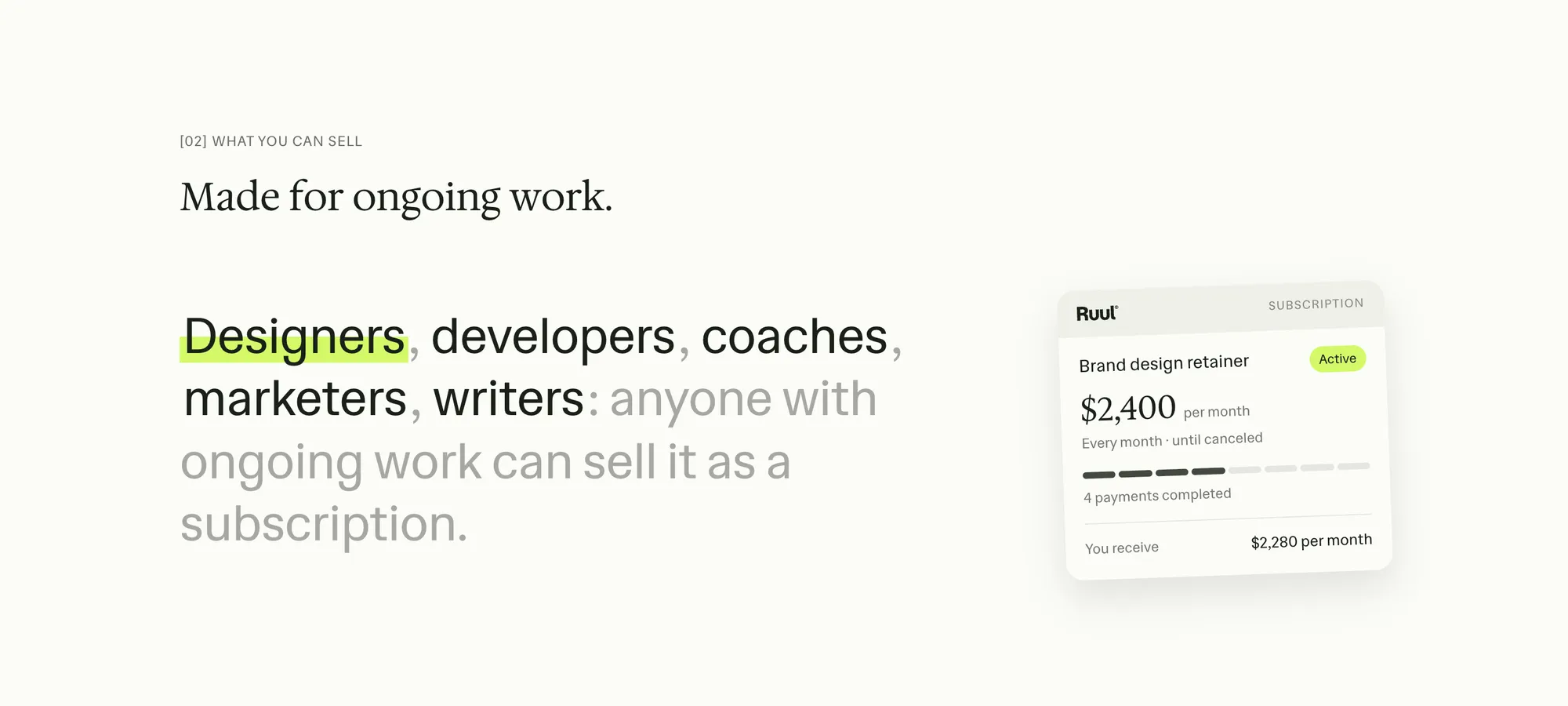
Got a client who wants 10 blog posts a month or monthly social media management? Same client, same fee every month, so a subscription sounds like the obvious setup.
Here’s the catch: Gumroad doesn’t allow ongoing service contracts or services delivered outside the platform, so this kind of retainer doesn’t belong there. For monthly client work, use a tool built for recurring invoicing. You set the amount and schedule once, your client pays by card automatically, and the invoice is created for you each cycle.
Digital services
Selling digital services on Gumroad is possible, within limits. Once your account is 30 days old, you can sell commissions, calls and tips, but in-person work, tech support and ongoing service contracts aren’t allowed.
Best digital services to sell on Gumroad?
1. Commission: Sell online services

On Gumroad, the spot labeled “Commission” works like a custom service model.
Here’s how it works:
- Client pays 50% upfront
- Remaining 50% is paid once the work is delivered
So, who uses this and what can be sold?
Mainly freelancers. For example, a graphic designer could create a package like “Logo design = $500” and funnel clients through Gumroad.
Key tip: When listing, don’t skip details in the description or visuals. Misunderstandings can blow up otherwise. Gumroad wasn’t built specifically for freelancers, so managing revisions, client communication, and solving issues isn’t always smooth.
2. Call: Sell your time.
On Gumroad, you can literally sell your time. When you add a new product, you’ll find “Call” under Services. It comes with built-in scheduling for one-on-one sessions with clients.
This isn’t a digital file; it’s a time-based service.
Examples:
- A freelancer sells 1-hour consulting over Zoom/Google Meet
- A teacher offers private lessons
- A coach/therapist runs sessions
- A designer or marketer sells strategy calls
In short: Call is for selling expertise + time. If you’ve got free slots in your calendar and want to monetize them through consulting, this is the tool to use.
3. Coffee: Take tips.
Not exactly a sale, but worth mentioning. Gumroad has a Coffee section where followers can send you small donations. Basically, “buying you a coffee.”
It’s usually not a regular product sale, just micro-payments for support. You can set a default amount plus two more suggested amounts, and supporters can also tip any amount they like.
And with that, we’ve covered the main things you can sell on Gumroad. You can also group existing products into a bundle and sell them together at a new price.
FAQs
1. What products can you sell on Gumroad?
You can sell digital products, memberships, courses, services, and even coffee tips. Think ebooks, design templates, software tools, tutorials, or exclusive community access.
2. What can you not sell on Gumroad?
Gumroad bans physical products, reselling products you didn’t create, AI services fulfilled outside Gumroad, in-person or ongoing service contracts, event tickets, cheats, pirated content, NSFW content, dropshipping, gift cards, financial tokens, IPTV, and dating services. The list changes often, so check it before launching.
3. Can you sell free products on Gumroad?
Yes, you can offer free products on Gumroad. Creators often share ebooks, guides, or resources for free to grow their audience, build trust, and upsell later.
4. Can you actually make money on Gumroad?
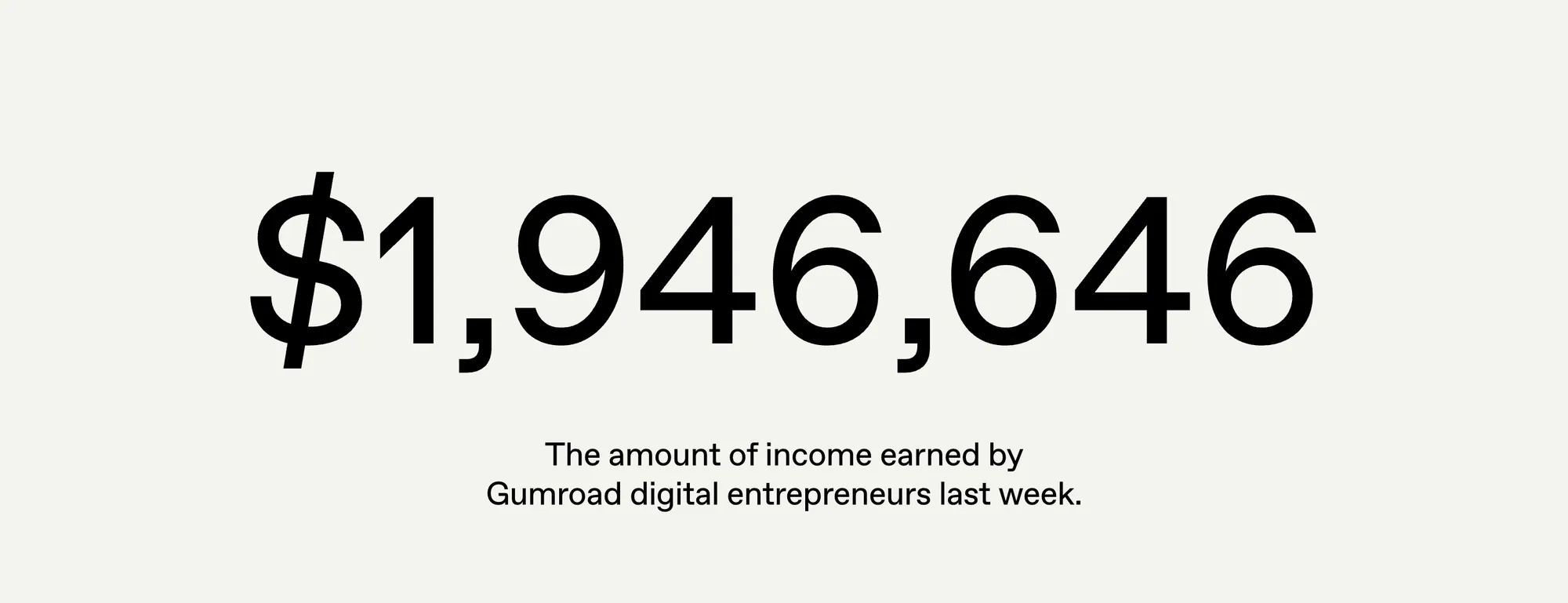
Absolutely. Creators earn from ebooks, courses, memberships, or niche tools. Success depends on offering value, solving problems, and marketing smartly.
5. Does Gumroad sell physical products?
No. Gumroad now lists physical products among the things you can’t sell, so it’s built for digital products, memberships, and a few service formats.
Written by · COO